
Homemade Cinnamon Rolls
 By Janet Homme · Updated May 12, 2026
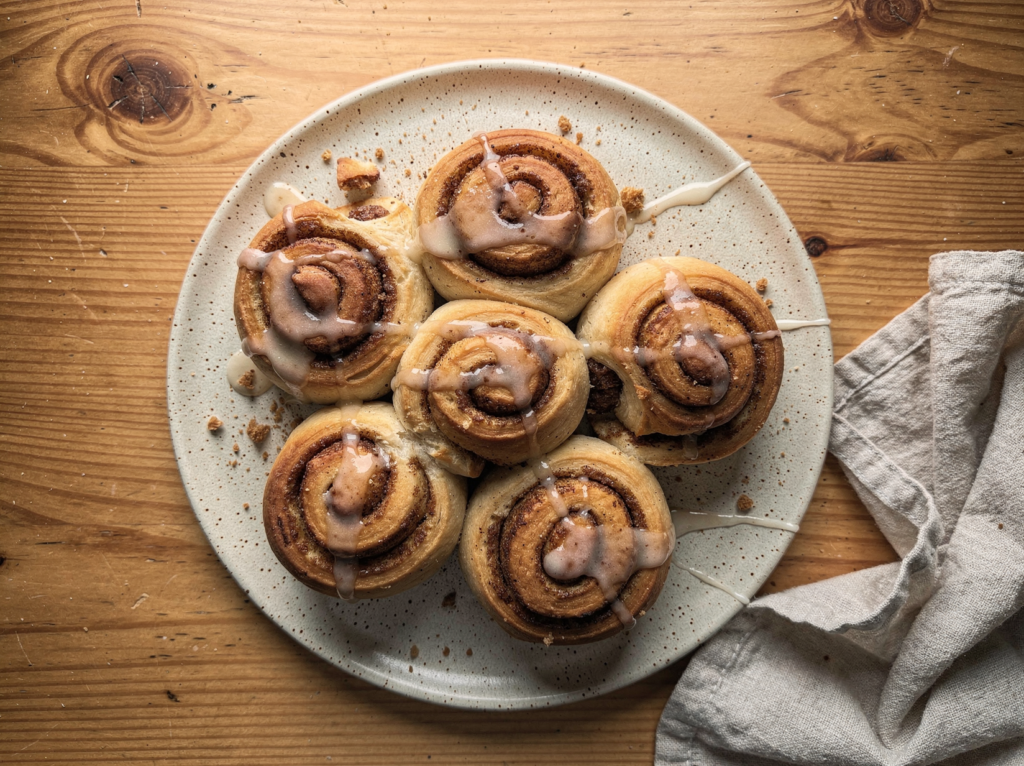
A great cinnamon roll is a small miracle of texture: a pillowy, slightly stretchy crumb wrapped around a molten ribbon of cinnamon sugar, finished with frosting that melts just enough into the warm spirals. These rolls deliver exactly that, and they are far more forgiving than their reputation suggests. With a little patience for two rises, anyone can pull a pan of bakery quality rolls out of their own oven.
The dough here is an enriched yeast dough, meaning it carries milk, eggs, butter, and sugar that give it tenderness and a faint sweetness. That richness is what separates a true cinnamon roll from a dense bread roll dusted with cinnamon. It also makes the dough soft and pliable, which is a joy to roll.
We use dark brown sugar in the filling for a deeper, more caramel like gooeyness, and we frost with a tangy cream cheese frosting rather than a flat sugar glaze. The slight tang cuts the sweetness and keeps you reaching for one more roll. The whole thing tastes like a special occasion even on an ordinary Sunday.
Below I walk you through blooming the yeast, building and kneading the dough, shaping clean spirals, and timing the bake so the centers are cooked but never dry. You will also find make ahead notes for serving these warm first thing in the morning.
Why you will love this
- Enriched dough: Milk, eggs, and butter create a soft, tender crumb that stays fluffy instead of turning into a dense bread roll.
- Dark brown sugar filling: Its extra molasses gives a richer, gooier, more caramelized ribbon than light brown or white sugar.
- Two proper rises: Letting the dough double and then proof again after shaping is what makes the rolls tall and airy.
- Cream cheese frosting: The gentle tang balances the sweet filling so the rolls never taste flat or sugary.
- Make ahead friendly: You can shape the night before and bake fresh, which makes them realistic for a weekday or holiday morning.
What you will need
Yeast baking rewards good ingredients and accurate measuring, but nothing here is exotic. A few notes will keep your dough lively and your filling gooey.
- Whole milk (1 cup): Warm it to 110 F, which feels just barely warm on your wrist. Too hot kills the yeast and too cool slows the rise.
- Active dry yeast (2 1/4 teaspoons): Check the date on the packet. Blooming it in warm milk first proves it is alive before you commit the whole batch.
- All purpose flour (4 1/4 cups): Spoon and level, or weigh at about 530 grams. Add the last quarter cup only if the dough is still sticky after kneading.
- Eggs (2 large): Room temperature eggs blend in smoothly and help the dough rise evenly. Warm cold eggs in hot tap water for five minutes.
- Dark brown sugar (3/4 cup): This is the heart of the gooey filling. Pack it firmly and combine it well with the cinnamon so the spread is even.
- Ground cinnamon (2 tablespoons): Use fresh, fragrant cinnamon. Old cinnamon tastes dusty and flat, which shows up clearly in the filling.
- Cream cheese (4 ounces): Full fat block style, softened to room temperature, gives a smooth, tangy frosting that spreads without lumps.
Equipment: You need a large mixing bowl or stand mixer with a dough hook, a rolling pin, a 9 by 13 inch baking dish, a bench scraper or sharp knife, and a clean kitchen towel.
How to make it, step by step
Step 1: Bloom the yeast
Warm the milk to 110 F and pour it into a large bowl or the bowl of a stand mixer. Stir in a pinch of the sugar and sprinkle the yeast over the top.
Let it sit undisturbed for 5 to 10 minutes. It should turn foamy and smell faintly of bread. If nothing happens, your yeast is dead or your milk was too hot, so start over to avoid wasting the rest of the ingredients.
Step 2: Mix and knead the dough
Add the remaining granulated sugar, the eggs, the softened butter, the salt, and four cups of the flour to the bloomed yeast. Mix until a shaggy dough forms, then knead by hand or with the dough hook for 8 to 10 minutes.
Add the final quarter cup of flour only if the dough clings stubbornly to your hands or the bowl. You want a dough that is soft and slightly tacky but pulls away cleanly and springs back when poked.
Knead until the dough is smooth and elastic and passes the windowpane test, meaning you can stretch a small piece thin enough to see light through it without tearing. That elasticity is what traps the gas for a fluffy rise.
Step 3: First rise
Shape the dough into a ball and place it in a lightly oiled bowl, turning it once to coat. Cover with a damp towel or plastic wrap.
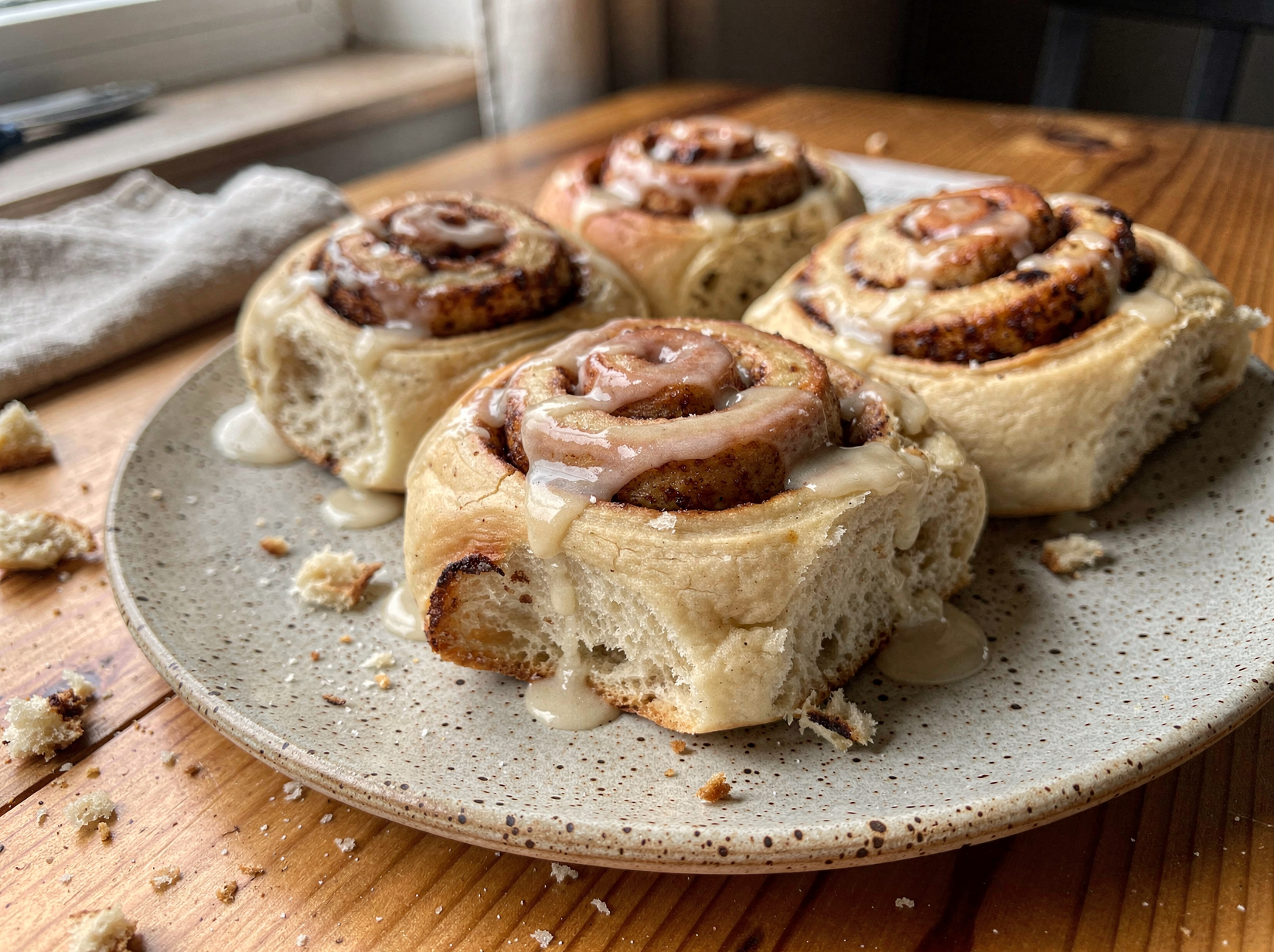
Set it in a warm, draft free spot and let it rise until doubled in size, about 1 to 1 1/2 hours. The dough is ready when a finger poked into it leaves a dent that fills back in slowly rather than springing right back.
Step 4: Roll and fill
Punch down the risen dough and turn it onto a lightly floured surface. Roll it into a rectangle roughly 16 by 12 inches and about a quarter inch thick, keeping the edges as square as you can.
Spread the very soft filling butter all the way to the edges, then sprinkle the combined dark brown sugar and cinnamon evenly over the surface. Press it down gently with your palm so it adheres and does not spill out when you roll.
Leave a half inch border clean along the far long edge. That bare strip is what seals the roll shut and keeps the filling from leaking during baking.
Step 5: Roll up and slice
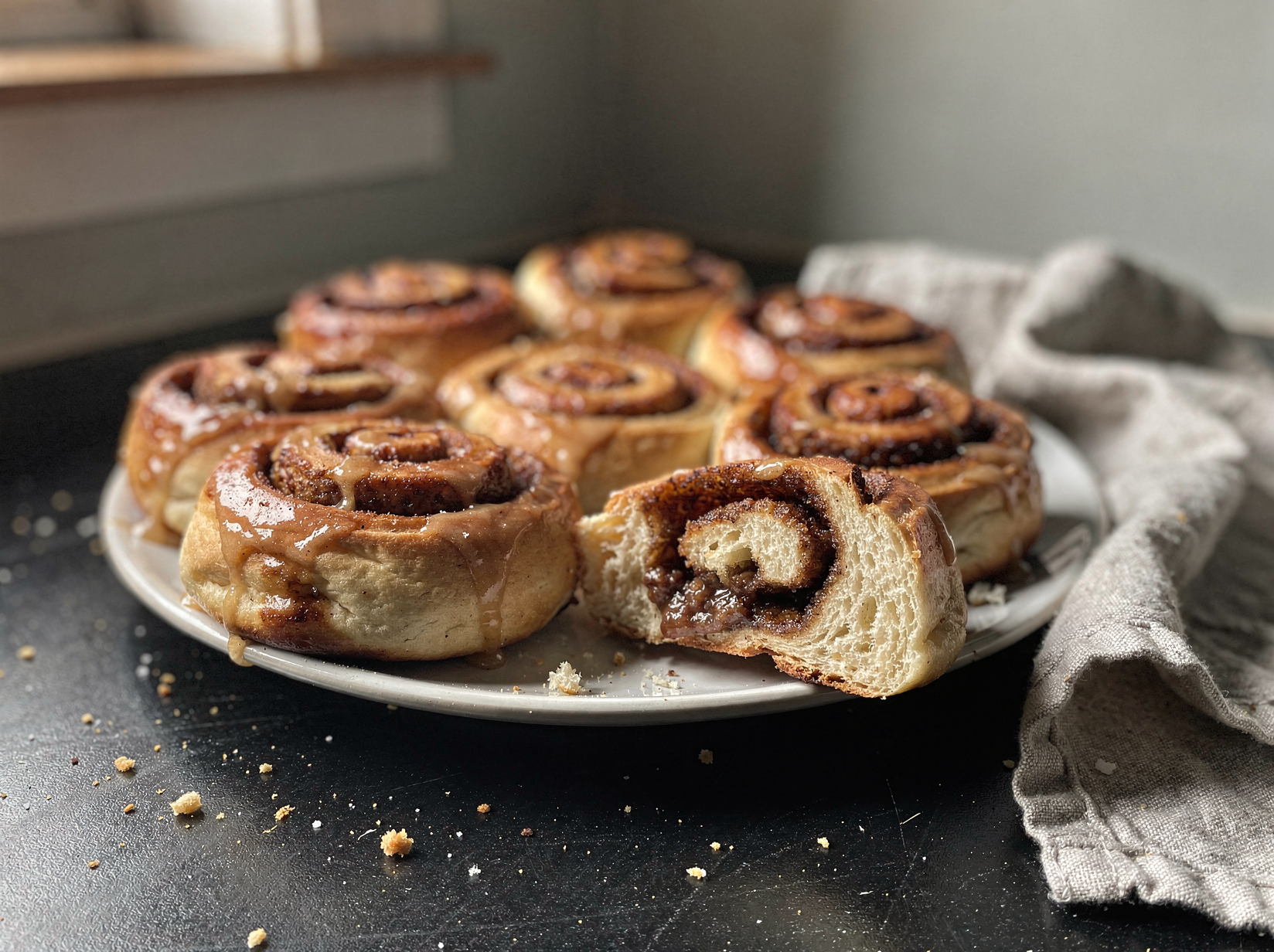
Starting from the long edge closest to you, roll the dough into a tight, even log. Keep gentle, consistent tension so there are no loose gaps that would let the spiral unwind.
Pinch the seam to seal, then place the log seam side down. Use a bench scraper or a length of unflavored dental floss to cut 12 even rolls. Floss slides under the log and pulls up to slice without squashing the spirals.
Step 6: Second rise
Butter a 9 by 13 inch baking dish and arrange the rolls cut side up with a little space between them. They will expand and knit together as they proof and bake.
Cover the dish and let the rolls rise again until puffy and nearly touching, about 30 to 45 minutes. This second proof is what gives the rolls their tall, soft, tender texture, so do not rush it.
Step 7: Bake the rolls
Heat the oven to 350 F and bake the rolls for 22 to 26 minutes. The tops should turn golden brown and the centers should feel set rather than doughy when gently pressed.
For certainty, check the center roll with an instant read thermometer. It should register about 190 F when fully baked. Pull them as soon as they hit that mark so the crumb stays soft and moist.
Let the rolls cool in the pan for about 10 minutes. They need to be warm but not piping hot so the frosting melts into the grooves without sliding off entirely.
Step 8: Frost and serve
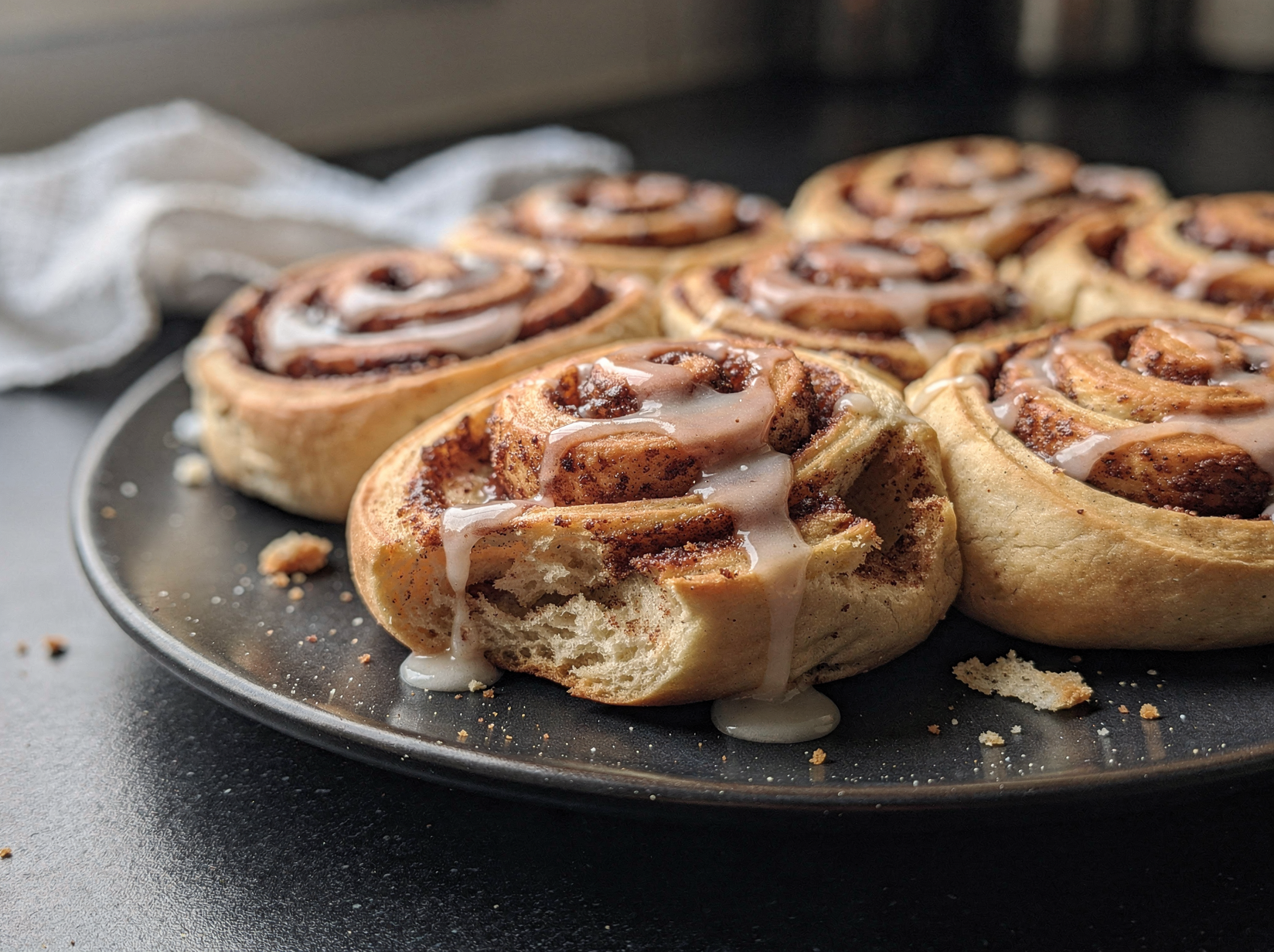
While the rolls cool, beat the softened cream cheese and butter until smooth, then add the powdered sugar, vanilla, and a pinch of salt. Beat until fluffy and spreadable with no lumps.
Spread the frosting generously over the warm rolls so it half melts into the swirls and stays luscious on top. Serve immediately, and watch them disappear before the second pot of coffee is done.
Tips for the best results
- Check your milk temperature: Aim for 110 F. A quick read thermometer removes all the guesswork from blooming the yeast.
- Use floss to slice: Unflavored dental floss cuts clean rolls without flattening them the way a dull knife will.
- Warm spot for rising: An oven with just the light on, or a turned off oven with a bowl of hot water, makes a great proofing box.
- Do not overbake: Pull the rolls at 190 F internal. A few extra minutes is the difference between tender and dry.
- Soften everything fully: Cold butter and cream cheese leave lumps in the frosting, so let them sit out for an hour first.
Variations and substitutions
- Orange rolls: Add the zest of one orange to the filling and a splash of orange juice to the frosting for a citrus version.
- Pecan sticky rolls: Spread a brown sugar and butter caramel with toasted pecans in the pan, then invert after baking.
- Apple cinnamon: Scatter finely diced sauteed apples over the filling before rolling for a cozy fall twist.
- Extra gooey: Pour 1/4 cup of warm heavy cream over the shaped rolls just before baking for an ultra soft, custardy base.
How to store and reheat
Store frosted rolls covered at room temperature for up to two days or in the refrigerator for up to five. Warm individual rolls in the microwave for about 20 seconds to bring back that fresh from the oven softness.
To freeze, wrap unfrosted baked rolls tightly and freeze for up to two months. Thaw, warm in a 300 F oven until heated through, then frost just before serving.
What to serve it with
- Warm with a tall glass of cold milk
- Alongside fresh berries and yogurt for balance
- With a strong cup of black coffee or espresso
- As the centerpiece of a holiday brunch spread
Frequently asked questions
Yes. Shape the rolls, cover the pan, and refrigerate overnight. In the morning let them sit at room temperature for 30 to 45 minutes to finish rising, then bake as directed.
Usually the yeast was killed by milk that was too hot, or your kitchen is too cold. Always bloom the yeast first, keep the milk near 110 F, and proof in a warm, draft free spot.
Yes. With instant yeast you can skip the blooming step and mix it straight into the flour, and the rise may be slightly faster. Use the same amount.
Leave a clean half inch border along the far edge, roll the log tightly, and pinch the seam to seal. Baking in a dish rather than on a sheet also catches any that escapes.
The most common cause is overbaking. Pull them when the centers reach about 190 F and the tops are just golden, and frost while still warm to lock in moisture.
Homemade Cinnamon Rolls
Soft, fluffy cinnamon rolls with a gooey brown sugar filling and tangy cream cheese frosting, made from scratch.
Ingredients
- 1 cup whole milk, warmed to 110 F
- 2 1/4 teaspoons active dry yeast (1 packet)
- 1/4 cup granulated sugar
- 4 1/4 cups all purpose flour, plus more for dusting
- 1 teaspoon fine sea salt
- 2 large eggs, room temperature
- 6 tablespoons unsalted butter, softened
- 3/4 cup packed dark brown sugar
- 2 tablespoons ground cinnamon
- 6 tablespoons unsalted butter, very soft, for filling
- 4 ounces cream cheese, softened
- 1/4 cup unsalted butter, softened, for frosting
- 1 1/2 cups powdered sugar
- 1 teaspoon pure vanilla extract
- pinch of fine sea salt
Instructions
- Bloom the yeast in warm milk with a pinch of sugar, then mix into flour, sugar, salt, eggs, and softened butter to form a dough.
- Knead until smooth, then let rise covered until doubled, about 1 to 1 1/2 hours.
- Roll the dough into a large rectangle, spread with soft butter, and sprinkle with the brown sugar and cinnamon mix.
- Roll up tightly, slice into 12 rolls, and arrange in a buttered baking dish.
- Let rise again until puffy, about 30 to 45 minutes, then bake at 350 F for 22 to 26 minutes.
- Beat the cream cheese frosting and spread it over the warm rolls before serving.
Notes
- Use an instant read thermometer to keep the milk near 110 F so you do not kill the yeast.
- For overnight rolls, refrigerate after shaping and bake in the morning.
- The rolls are done when the centers reach about 190 F and the tops are golden.