
Creamy Tomato Soup
 By Janet Homme · Updated June 14, 2026
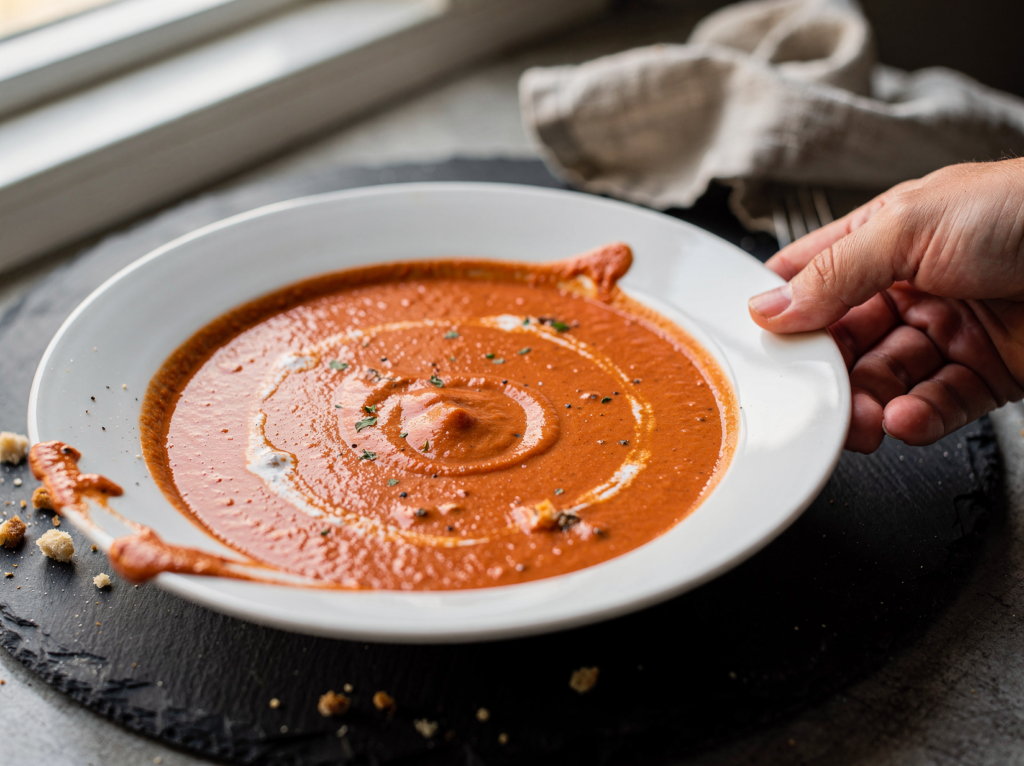
Tomato soup is the ultimate comfort lunch, and this version proves you do not need fresh summer tomatoes to make a great bowl. By roasting good canned tomatoes you concentrate their flavor and coax out a deep sweetness, which gives the soup a richness that opening a can of soup never delivers. The result is velvety, balanced, and deeply satisfying.
I grew up eating tomato soup from a can with a grilled cheese on the side, and I still love that combination. But once I started roasting the tomatoes and building a proper base of caramelized onion and garlic, there was no going back. This is the soup I make on gray afternoons when I want something cozy without much fuss.
The method is forgiving and mostly hands off. While the tomatoes roast you build a quick aromatic base, then everything simmers together and gets blended into a smooth, glossy pot of soup finished with butter and cream.
Below I will take you through roasting the tomatoes, building the base, simmering, blending, and finishing the soup so it comes out silky and balanced every time. Grab your blender and let us make a far better bowl than anything from a can.
Why you will love this
- Better than canned: Roasting the tomatoes and building a real aromatic base gives a depth of flavor no store soup can match.
- Pantry friendly: It relies on canned tomatoes, so you can make it any time of year without hunting for perfect fresh ones.
- Silky texture: A good blend plus butter and cream gives the soup that luxurious velvety body of a restaurant bisque.
- Mostly hands off: The tomatoes roast on their own while you build the base, so active time is short and the oven does much of the work.
- Easy to adapt: It takes well to extra herbs, a hit of heat, roasted red peppers, or a dairy free swap, so you can make it your own every time.
What you will need
This soup is built almost entirely from pantry staples, with a little fresh garlic, onion, and basil to wake everything up. The quality of your canned tomatoes matters most, so buy a brand you trust.
- Whole peeled tomatoes (two 28 ounce cans): Whole canned tomatoes are picked ripe and packed quickly, so they often taste better than out of season fresh ones; San Marzano style are ideal for their natural sweetness and low acidity.
- Yellow onion (1 large): Cooked low and slow it turns sweet and jammy, forming the savory backbone of the soup.
- Tomato paste (2 tablespoons): A spoonful adds concentrated tomato depth and a touch of natural sweetness that rounds out the broth.
- Heavy cream (0.5 cup): It softens the acidity and gives the soup its signature velvety finish; stir it in off the heat to keep it from breaking.
- Fresh basil (0.25 cup): Added at the end it brings a bright herbal lift that dried basil simply cannot provide.
- Sugar (1 teaspoon): Just a little balances the natural tartness of the tomatoes without making the soup taste sweet.
Equipment: You need a rimmed sheet pan, a large heavy pot or Dutch oven, and either an immersion blender or a countertop blender for pureeing.
How to make it, step by step
Step 1: Roast the tomatoes
Heat your oven to 425F. Pour both cans of whole tomatoes, juices and all, onto a rimmed sheet pan and gently break the tomatoes apart with your hands or a spoon so they lie flat. Drizzle with a tablespoon of the olive oil.
Roast for about twenty five minutes, until the edges of the tomatoes are caramelized and browned and most of the juices have cooked down. This roasting step is what concentrates the flavor and adds the sweet, almost smoky depth that sets this soup apart.
Keep an eye on them in the last few minutes so the browned bits darken without burning. A little char around the edges is exactly what you want.
Those caramelized, slightly charred spots are pure flavor, so be sure to scrape every bit off the pan and into the pot later. This is the single step that makes the soup taste like far more than the sum of a few cans.
Step 2: Build the aromatic base
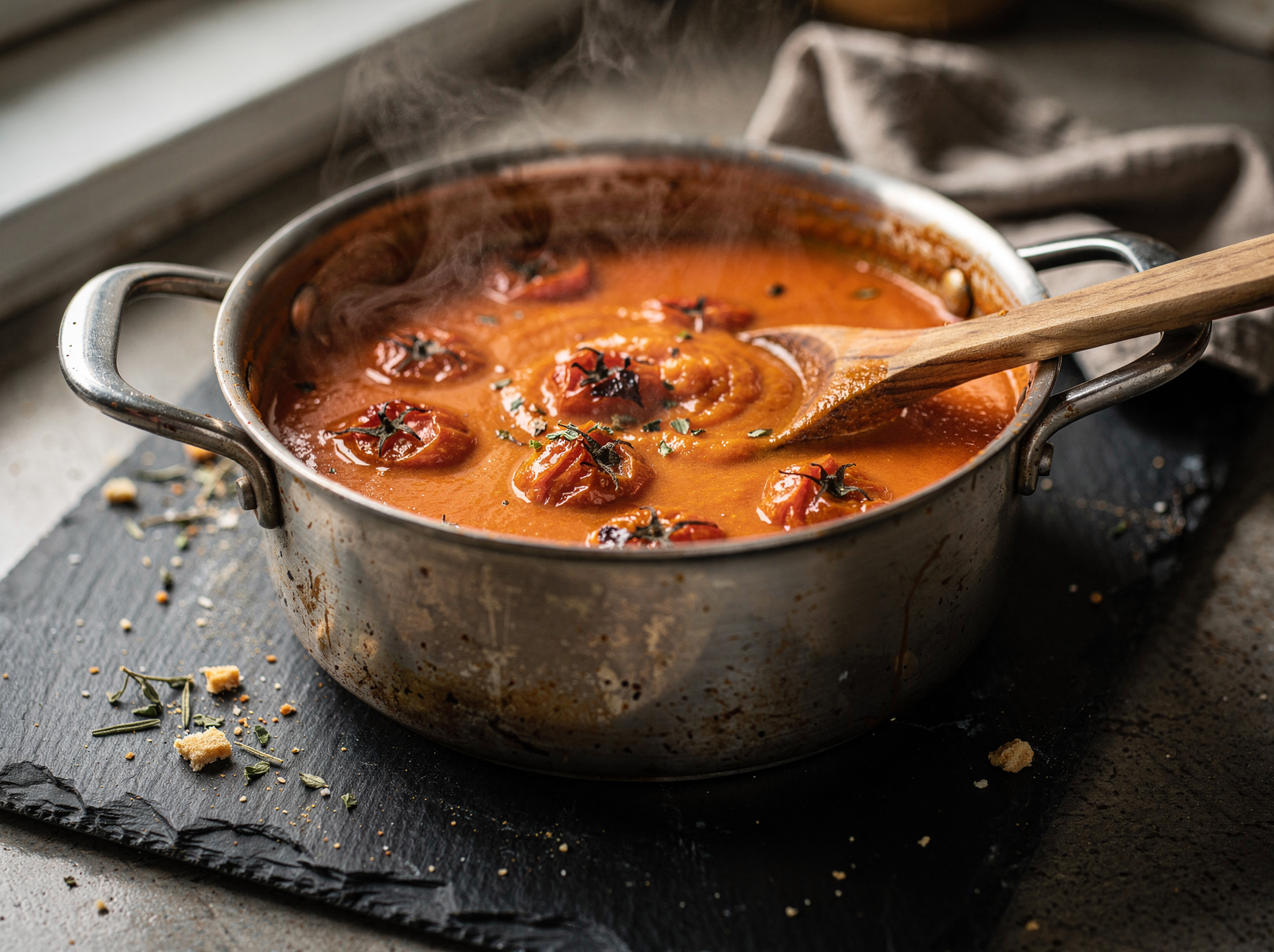
While the tomatoes roast, set a large pot over medium heat and add the remaining two tablespoons of olive oil. Add the diced onion with a pinch of salt and cook, stirring now and then, for eight to ten minutes until soft, translucent, and just starting to turn golden at the edges.
Stir in the minced garlic and cook for about a minute, just until fragrant, taking care not to let it brown or it will turn bitter. The kitchen should smell sweet and savory at this point.
Cooking the onion low and slow is what builds the savory backbone of the soup, so do not rush it. If the onion starts to color too quickly, lower the heat and add a splash of water to keep it soft and sweet.
Step 3: Bloom the tomato paste and spices
Push the onions to one side and add the tomato paste to the cleared spot. Let it cook in the oil for one to two minutes, stirring, until it darkens slightly to a brick red color. This brief toasting deepens the flavor and takes away any raw tinny edge.
Sprinkle in the dried oregano and the red pepper flakes if you are using them, and stir everything together. Cook for another thirty seconds so the spices bloom in the warm fat and release their aroma.
Blooming dried herbs and spices in fat is a small step that pays off, drawing out flavors that would stay muted if you just stirred them into liquid. Keep everything moving so nothing scorches on the bottom of the pot.
Step 4: Simmer the soup
Add the roasted tomatoes along with any browned bits scraped from the sheet pan, then pour in the broth. Stir in the sugar, the kosher salt, and the black pepper, and scrape up anything stuck to the bottom of the pot.
Bring the soup to a gentle simmer, then reduce the heat to keep it at a lazy bubble. Let it simmer uncovered for fifteen minutes so the flavors meld and the soup thickens slightly.
Give it a taste partway through and note whether it needs more salt or a touch more sugar to balance the acidity. Adjust gradually rather than all at once.
A longer, gentler simmer also helps the flavors marry into something cohesive rather than tasting like separate ingredients. Stir occasionally and keep the heat low so nothing catches on the bottom of the pot.
Step 5: Blend until smooth
Turn off the heat. If using an immersion blender, blend the soup directly in the pot, moving the wand around until it is completely smooth and glossy. If using a countertop blender, work in batches and never fill it more than halfway.
When blending hot soup in a countertop blender, remove the center cap from the lid and cover the opening with a folded towel so steam can escape safely. Hot liquid expands and can blow the lid off a sealed blender.
Blend until the texture is silky with no visible chunks. For an extra refined bisque you can pass it through a fine mesh sieve, though it is lovely as is.
Let the soup blend a good thirty seconds longer than you think you need to, since that extra time is what gives it a truly velvety, restaurant quality body. A high speed blender produces the smoothest result if you have one.
Step 6: Finish with butter, cream, and basil
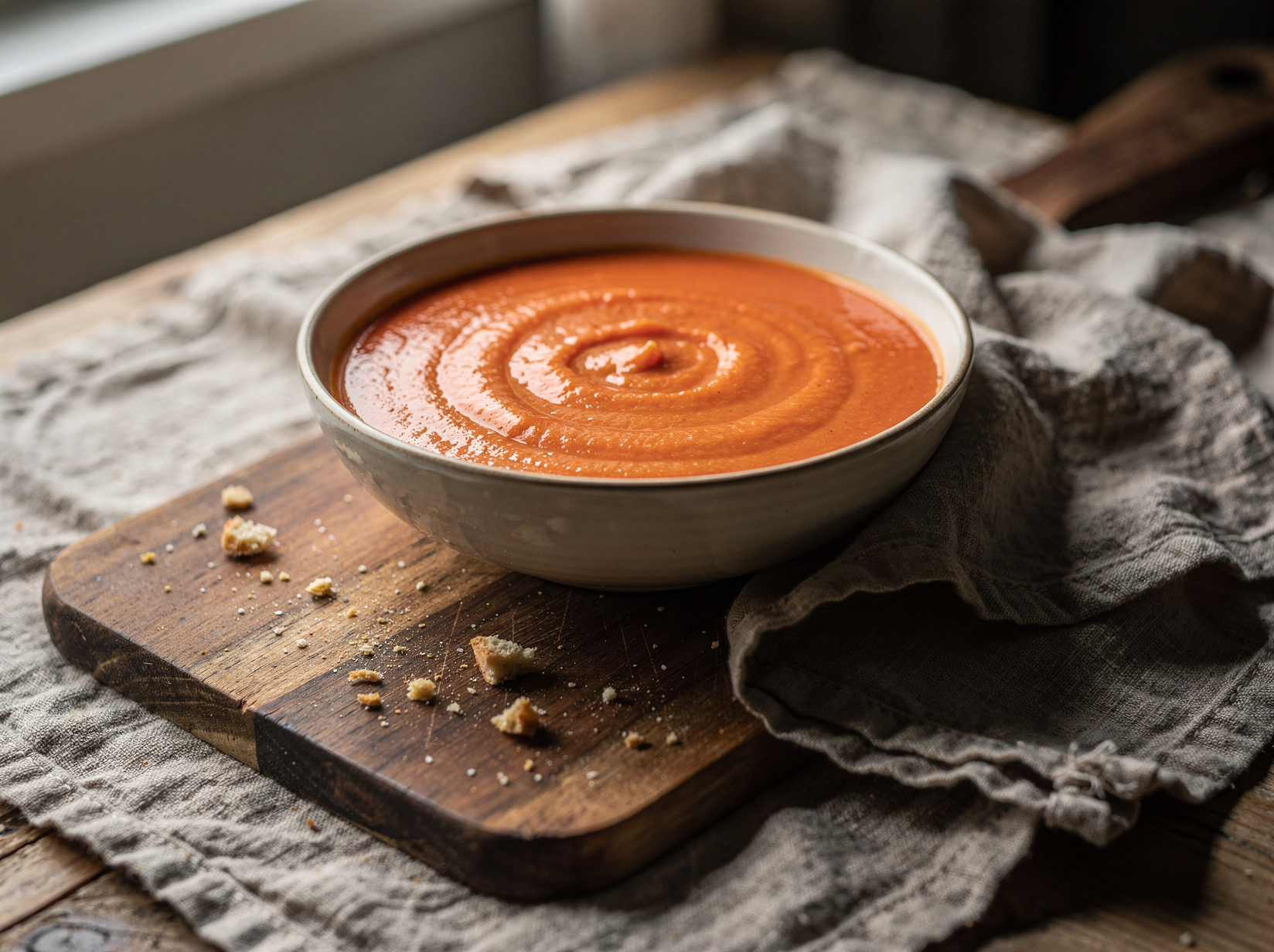
Return the blended soup to low heat. Stir in the butter until it melts and disappears, then pour in the heavy cream and stir gently to combine. Adding the cream off a hard boil keeps it from separating.
Stir in the chopped fresh basil and let the soup warm through for two to three minutes without letting it boil. The butter adds richness and gloss while the cream and basil bring it all into balance.
If you prefer a more intense basil flavor, you can blend a handful of the leaves right into the soup for a green tinged, herbal bowl. Reserve a few whole leaves either way for garnishing each serving.
Step 7: Taste and adjust
Give the finished soup a final taste. Tomatoes vary a lot from brand to brand, so this is the moment to add another pinch of salt, a little more sugar for sweetness, or a few cracks of pepper.
If the soup is thicker than you like, loosen it with a splash of broth or water until it reaches the consistency you want. It should coat the back of a spoon but still pour easily.
On the other hand, if it seems thin, let it simmer a few extra minutes uncovered to reduce and concentrate. This is your last chance to fine tune, so taste and tweak until the bowl tastes balanced and round.
Step 8: Serve it up
Ladle the hot soup into bowls and finish each with a swirl of cream, a few torn basil leaves, and a crack of black pepper. A drizzle of good olive oil on top adds a glossy, peppery finish.
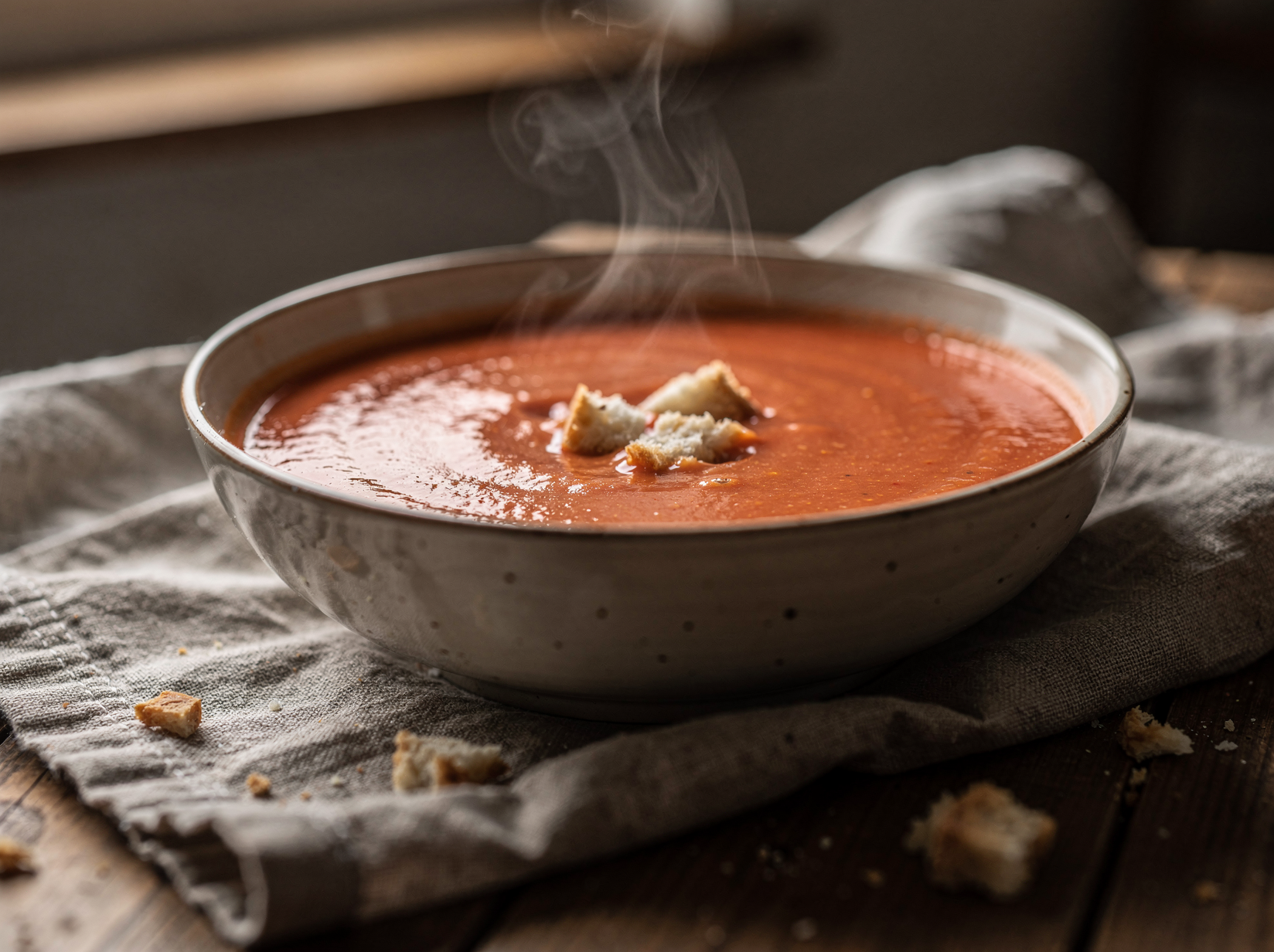
Serve right away while it is steaming, ideally with a crusty piece of bread or a grilled cheese for dunking. Tomato soup is at its very best fresh and hot from the pot.
For a little extra flourish, scatter some homemade croutons or a handful of grated Parmesan over the top. A few cracks of black pepper and a final drizzle of olive oil make even a simple bowl feel special.
Tips for the best results
- Roast for depth: Do not skip roasting the tomatoes; those caramelized edges are where the soup gets its rich, sweet flavor.
- Toast the paste: Cooking the tomato paste until it darkens removes any raw, tinny taste and builds savory depth.
- Vent your blender: Always let steam escape when blending hot soup, or pressure can force the lid off and make a dangerous mess.
- Add cream off the boil: Stir in the cream over low heat so it stays smooth and does not curdle or separate.
- Season at the end: Canned tomatoes vary widely in acidity and salt, so adjust seasoning after everything has come together.
Variations and substitutions
- Dairy free: Swap the cream for full fat coconut milk and the butter for olive oil for a rich vegan bowl.
- Roasted red pepper: Blend in a couple of jarred roasted red peppers for a sweeter, smokier soup.
- Extra creamy bisque: Stir in a few ounces of cream cheese while blending for a thicker, tangier restaurant style texture.
- Herby twist: Trade the basil for fresh thyme or a spoonful of pesto stirred in at the end for a different aromatic profile.
How to store and reheat
Cool the soup completely and store it in an airtight container in the refrigerator for up to five days. Reheat gently over low heat, stirring often, and avoid a hard boil so the cream stays smooth.
This soup freezes very well, especially if you freeze it before adding the cream. Cool it, ladle into freezer containers, and freeze for up to three months, then thaw overnight in the fridge and stir in the cream when you reheat.
What to serve it with
- Serve with a buttery grilled cheese for dunking
- Top with homemade croutons and shaved Parmesan
- Add a drizzle of basil oil or good olive oil
- Pair with a crisp green salad for a light lunch
Frequently asked questions
Yes, when tomatoes are in peak season fresh ones are wonderful here. Use about three pounds of ripe plum tomatoes, halve them, and roast cut side up until soft and caramelized before continuing with the recipe.
Tomatoes are naturally tart, and some canned brands are more acidic than others. A teaspoon of sugar and the cream and butter at the end all help balance it, so add them gradually and taste as you go until it tastes round rather than sharp.
Use vegetable broth to keep it vegetarian. For a fully vegan version, swap the butter for olive oil and the heavy cream for full fat coconut milk or a splash of unsweetened cashew cream, both of which give a similar velvety body.
Simply stir in a little extra broth or water, a few tablespoons at a time, over low heat until it reaches the consistency you like. It should pour from the ladle but still cling to a spoon.
You can, though the texture will be more rustic and chunky rather than silky. Break the tomatoes down well as they cook, simmer a bit longer, and mash with a potato masher or whisk vigorously to get it as smooth as possible.
Creamy Tomato Soup
A velvety roasted tomato soup with sweet caramelized onion, garlic, and a swirl of cream that tastes far better than canned.
Ingredients
- 2 (28 ounce) cans whole peeled tomatoes
- 3 tablespoons olive oil
- 1 large yellow onion, diced
- 4 cloves garlic, minced
- 2 tablespoons tomato paste
- 1 teaspoon dried oregano
- 0.5 teaspoon red pepper flakes (optional)
- 1 teaspoon sugar
- 2 cups chicken or vegetable broth
- 0.5 cup heavy cream
- 3 tablespoons unsalted butter
- 0.25 cup chopped fresh basil, plus more to garnish
- 1.5 teaspoons kosher salt, plus more to taste
- 0.5 teaspoon black pepper
Instructions
- Roast the canned tomatoes on a sheet pan at 425F until edges caramelize, about 25 minutes.
- Sweat the onion in olive oil until soft, then add garlic, tomato paste, oregano, and pepper flakes.
- Add the roasted tomatoes, broth, sugar, salt, and pepper, then simmer 15 minutes.
- Blend the soup smooth, then stir in the butter, cream, and fresh basil.
- Simmer gently to meld, taste and adjust seasoning, then serve hot with a swirl of cream.
Notes
- Roasting the canned tomatoes concentrates their flavor and adds a subtle sweetness you cannot get otherwise.
- A pinch of sugar balances the acidity of the tomatoes; add it gradually and taste as you go.
- An immersion blender makes this a one pot soup, but a countertop blender gives the silkiest texture.