
Caprese Sandwich
 By Sofia Reyes · Updated April 4, 2026
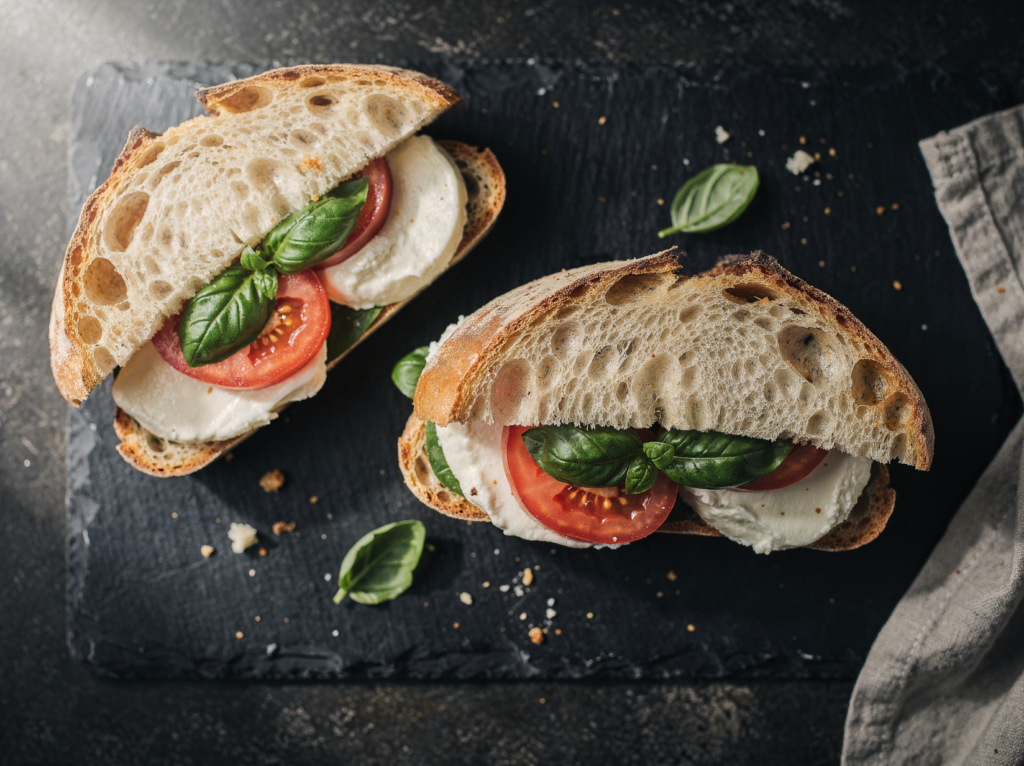
Some lunches are about technique, and some are about restraint, and this sandwich is firmly the second kind. A caprese sandwich is the classic Italian trio of tomato, mozzarella, and basil tucked into good bread, and when the ingredients are at their peak it is genuinely one of the best things you can eat. There is no cooking and barely any work, just careful assembly.
I make this all summer long when tomatoes are heavy and sweet and basil is spilling out of the garden. The whole thing leans on quality, so this is the time to buy the real fresh mozzarella swimming in water, not the firm shrink wrapped block. A loaf of crusty ciabatta gives you the right chew and a sturdy base that holds up to juicy tomatoes.
The two small tricks that elevate this sandwich are seasoning and balance. A good pinch of flaky salt on the tomatoes draws out their flavor, while a drizzle of balsamic glaze adds a sweet tart note that ties everything together. Rubbing the bread with a cut clove of garlic adds a subtle savory backbone you will miss if you skip it.
Below I walk you through choosing and prepping each component, layering so nothing slides out, and keeping the bread from going soggy. It takes about fifteen minutes and tastes like an Italian cafe lunch.
Why you will love this
- No cooking required: It comes together in fifteen minutes with nothing but a knife and a cutting board.
- Showcases peak produce: When tomatoes and basil are in season, this is the best way to enjoy them.
- Fresh and satisfying: Creamy mozzarella and juicy tomato make it filling without feeling heavy.
- Endlessly adaptable: Add prosciutto, pesto, or greens to make it your own.
- Naturally elegant: It looks and tastes far more impressive than the effort it takes to make.
What you will need
This sandwich has only a handful of ingredients, which means each one truly counts. Here is what to buy and why it matters.
- Fresh mozzarella (8 oz): Buy the soft ball packed in water, not the firm low moisture block; it is creamy and milky and makes the sandwich.
- Ripe tomatoes (2 large): Use the ripest, in season tomatoes you can find; pale winter tomatoes will leave the sandwich flat.
- Fresh basil (1 cup): Whole fresh leaves bring that signature peppery, fragrant note; dried basil simply will not work here.
- Ciabatta: Its sturdy, chewy crumb and crisp crust hold up to juicy fillings without falling apart.
- Balsamic glaze (2 tbsp): The thick, syrupy reduction clings to the layers and adds a sweet tart balance.
- Olive oil (2 tbsp): A good extra virgin oil drizzled on the bread carries flavor and adds a fruity richness.
Equipment: You need only a sharp serrated bread knife, a regular knife for slicing the tomato and mozzarella, and a cutting board.
How to make it, step by step
Step 1: Prep and drain the tomatoes
Slice the tomatoes about a quarter inch thick and lay them out on a few sheets of paper towel. Sprinkle them lightly with some of the flaky salt.
Let them sit for about five minutes while you prep everything else. The salt draws out excess moisture, which both concentrates the tomato flavor and keeps your sandwich from turning into a soggy mess.
Step 2: Slice the mozzarella and bread
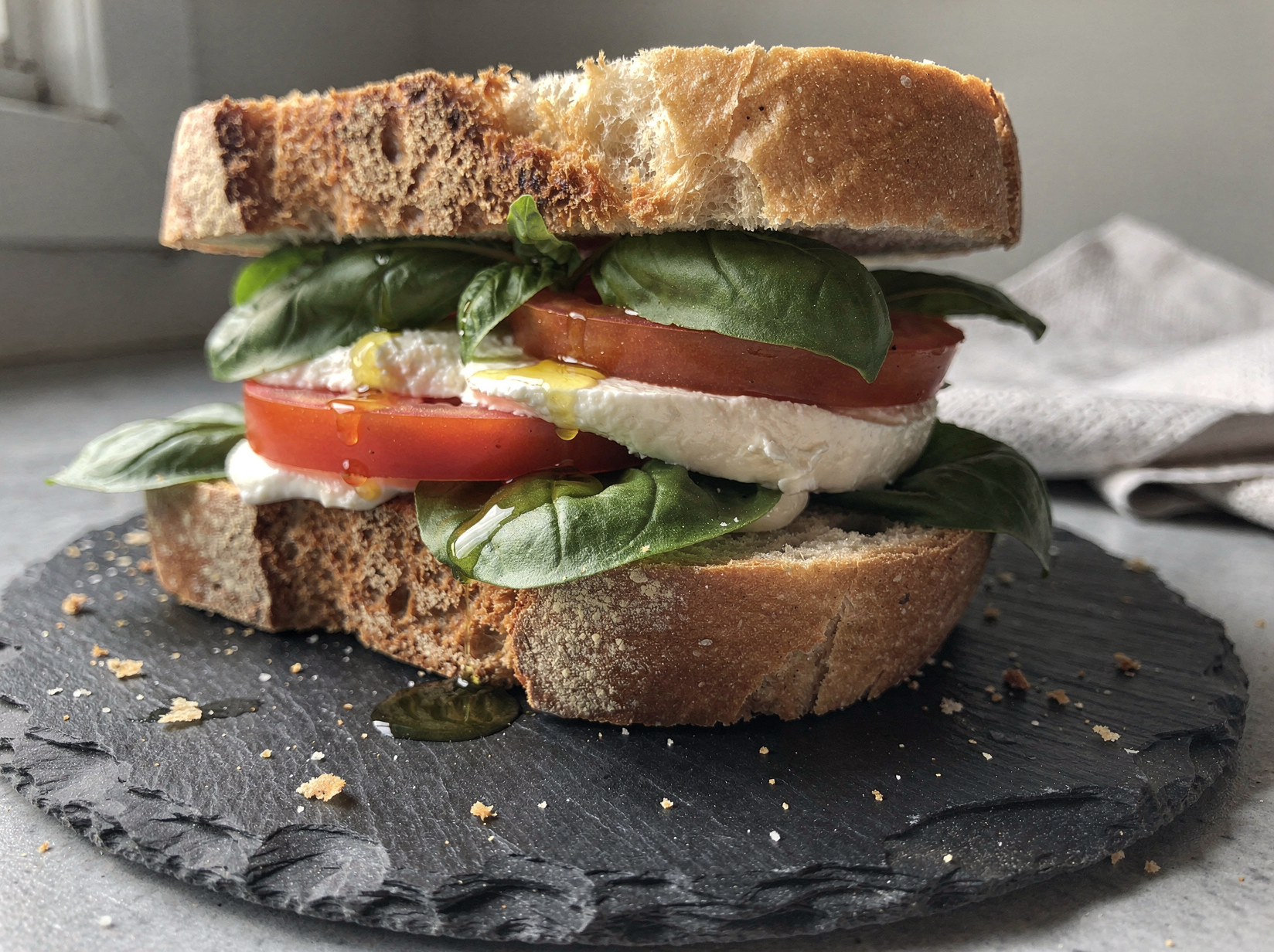
Cut the fresh mozzarella into slices roughly a quarter inch thick. If it is very wet, blot the slices gently with a paper towel so they do not add extra moisture.
Slice the ciabatta loaf in half horizontally with a serrated knife. If the bread is very thick, you can pull out a little of the soft interior to make room for the fillings.
Step 3: Season the bread
Take the halved garlic clove and rub the cut side firmly over the inside of both pieces of bread. The rough surface of the ciabatta grates the garlic into the crumb, leaving a subtle savory aroma.
Drizzle the cut sides of both halves with the olive oil, letting it soak in slightly. This adds flavor and creates a light barrier that helps protect the bread from the juicy fillings.
Step 4: Layer the mozzarella
Arrange the mozzarella slices in an even layer over the bottom piece of bread, covering it edge to edge. Putting the cheese down first creates a base that the tomato juices can rest on.
Overlap the slices slightly if needed so there are no bare gaps. A solid cheese foundation also helps hold the sandwich together when you cut it.
Step 5: Add the tomatoes and season
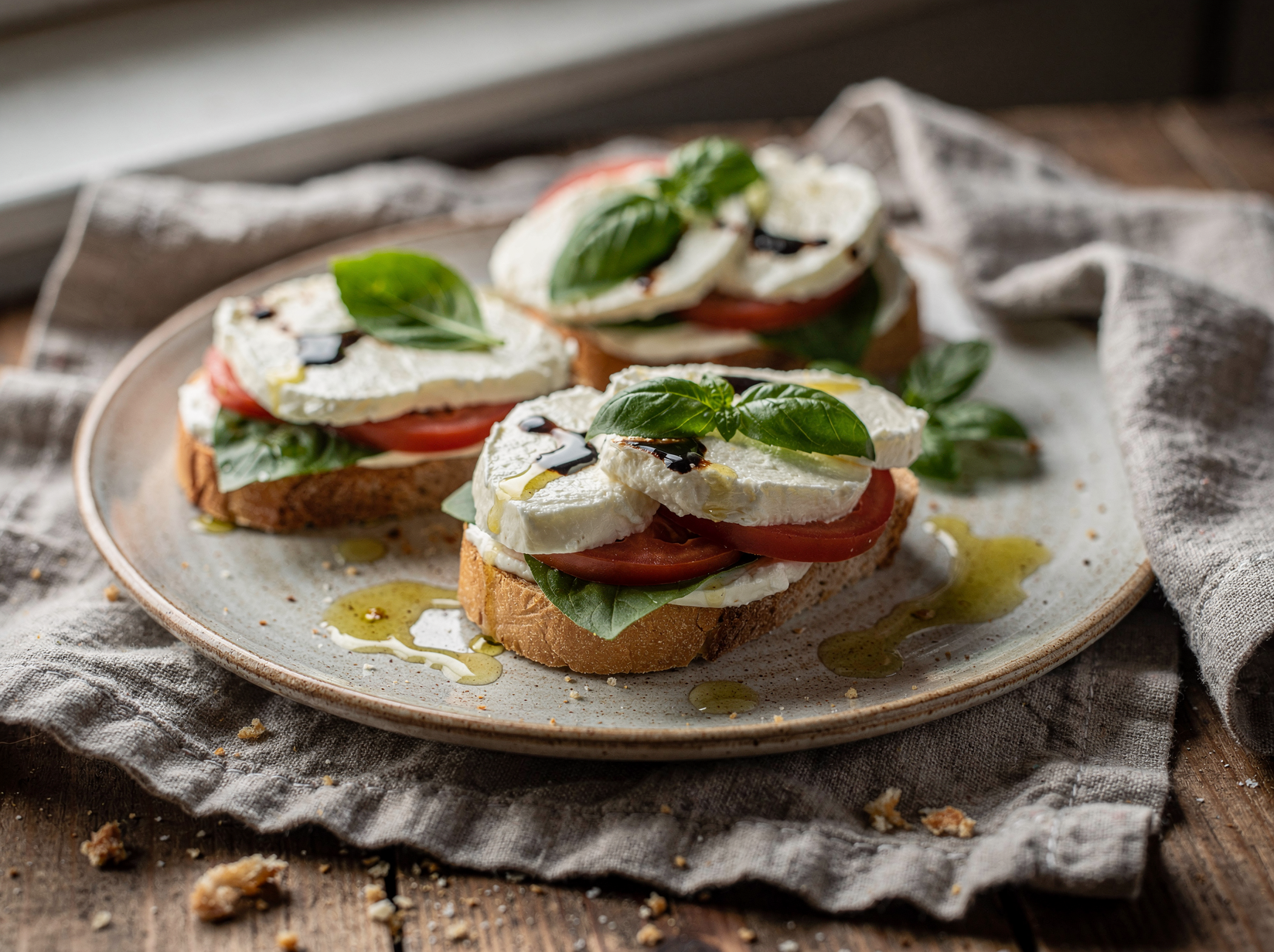
Lay the drained tomato slices over the mozzarella in a single even layer. Season them with the remaining flaky salt and a few grinds of black pepper.
Do not skip the seasoning here; salt and pepper are what wake up the tomato and bring the whole sandwich to life. Taste a stray tomato slice to make sure it is well seasoned.
Step 6: Pile on the basil
Cover the tomatoes with a generous layer of whole fresh basil leaves. Use more than you think you need, since basil mellows once it is pressed between the other ingredients.
Lay the leaves flat so they form a continuous green layer. The aroma at this point should be unmistakably fresh and herbal.
Step 7: Drizzle and close
Drizzle the balsamic glaze over the basil in a back and forth motion so every bite gets a little of that sweet tang. The syrupy glaze clings better than thin balsamic vinegar, which would just run off.
Set the top half of the bread in place, oiled side down. Press the sandwich down gently with your palm to help the layers settle and stick together.
Step 8: Cut and serve
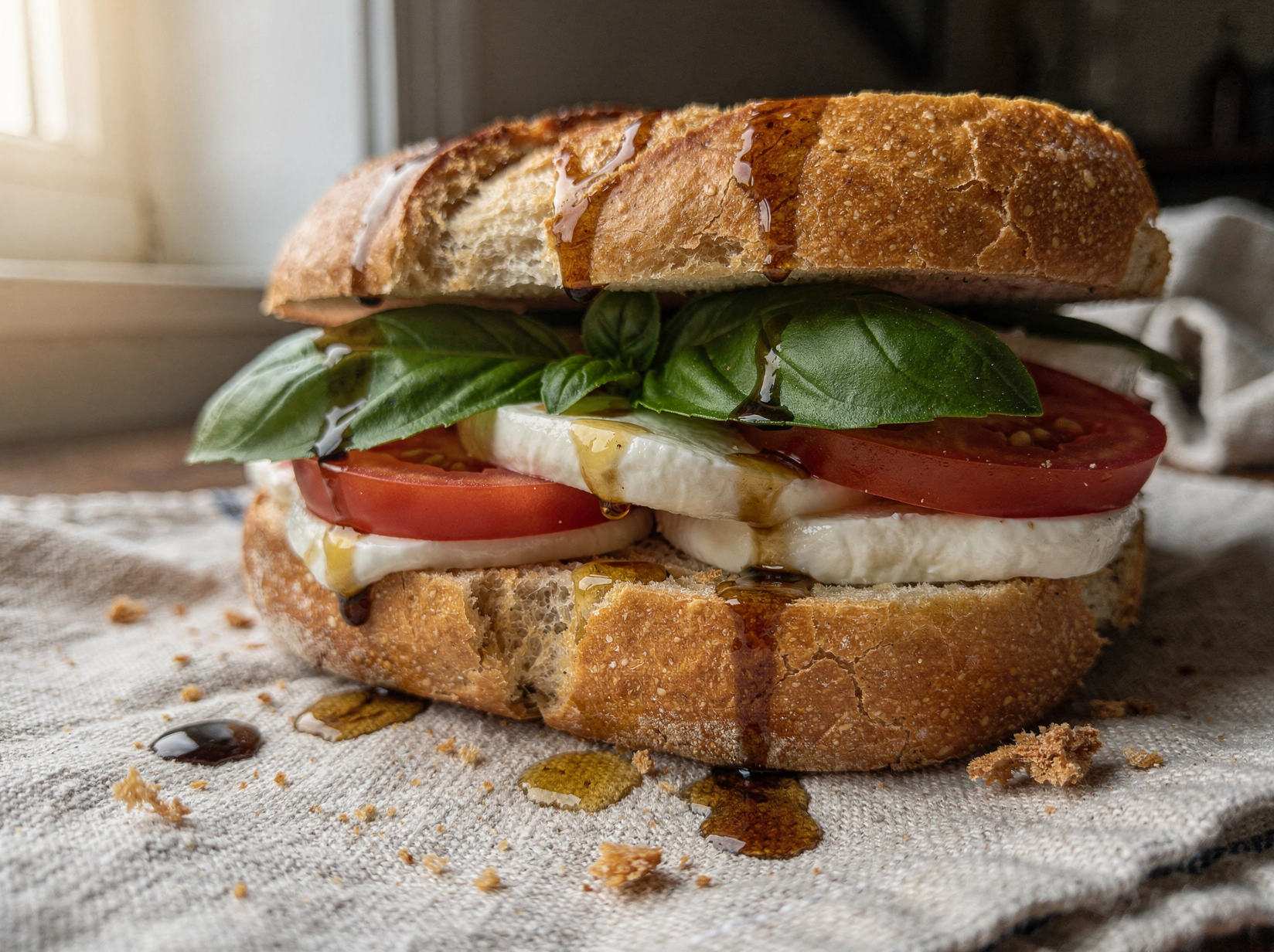
Cut the sandwich in half on a diagonal with your serrated knife, using a gentle sawing motion so you do not squash it. The cross section should show neat, colorful layers.
Serve right away while the bread is still crisp and the basil is fragrant. If packing it for later, wrap it snugly in parchment to hold everything in place.
Tips for the best results
- Salt the tomatoes: A pinch of salt and a few minutes of draining keeps the sandwich from going soggy and deepens the flavor.
- Choose great bread: Sturdy ciabatta holds up to juicy fillings far better than soft sandwich bread.
- Rub with garlic: A halved clove rubbed on the cut bread adds a quiet savory depth that makes a real difference.
- Use glaze not vinegar: Thick balsamic glaze clings to the layers, while thin vinegar simply soaks the bread.
- Serve fresh: This sandwich is at its best assembled and eaten right away while the bread stays crisp.
Variations and substitutions
- Add prosciutto: Layer in a few slices of prosciutto for a salty, savory upgrade.
- Swap in pesto: Spread basil pesto on the bread in place of, or in addition to, the fresh leaves.
- Make it a panini: Press the assembled sandwich in a hot panini press for a warm, melty version.
- Add greens: Tuck in a handful of arugula for a peppery bite and extra freshness.
How to store and reheat
This sandwich is best eaten fresh, but if you must store it, wrap it tightly in parchment and refrigerate for up to one day. The bread will soften as the tomato juices seep in, so it is a trade off.
Freezing is not recommended, since fresh tomatoes, mozzarella, and basil all suffer badly when frozen and thawed. For the best result, prep the components ahead and assemble the sandwich just before you plan to eat it.
What to serve it with
- Pair with a handful of kettle chips or olives
- Serve alongside a cup of chilled gazpacho or tomato soup
- Add a simple arugula salad with lemon vinaigrette
- Cut into small pieces for an easy summer party platter
Frequently asked questions
Use fresh mozzarella, the soft kind packed in water, for the creamiest result. Low moisture block mozzarella is firmer and better suited to melting, so it does not give the same milky, tender bite. Blot fresh mozzarella gently before layering so it does not add extra moisture.
The two keys are salting and draining the tomatoes, and drizzling olive oil on the bread to form a light barrier. Layering the cheese on the bottom also helps catch any tomato juices. For the crispest result, assemble and eat it right away.
It is best fresh, but you can prep the components ahead and store them separately, then assemble just before eating. If you need to make the whole sandwich in advance, wrap it tightly and expect the bread to soften over a few hours.
If you do not have glaze, you can reduce regular balsamic vinegar in a small saucepan until it thickens into a syrup. In a pinch, a light drizzle of good balsamic vinegar works too, though it is thinner and may soak into the bread more.
Yes, the classic version is fully vegetarian. If you add prosciutto or another cured meat as a variation, it no longer is. As written with just tomato, mozzarella, basil, and bread, it is a perfect vegetarian lunch.
Caprese Sandwich
A fresh Italian sandwich of ripe tomato, creamy mozzarella, and basil on crusty ciabatta with balsamic glaze.
Ingredients
- 1 ciabatta loaf or 2 ciabatta rolls
- 8 ounces fresh mozzarella, sliced 1/4 inch thick
- 2 large ripe tomatoes, sliced 1/4 inch thick
- 1 cup fresh basil leaves
- 2 tablespoons extra virgin olive oil
- 2 tablespoons balsamic glaze
- 1 small garlic clove, halved
- 1/2 teaspoon flaky sea salt
- 1/4 teaspoon freshly ground black pepper
Instructions
- Slice the ciabatta horizontally and rub the cut sides with a halved garlic clove.
- Drizzle both cut sides with olive oil.
- Layer mozzarella on the bottom, then tomato slices, seasoning with salt and pepper.
- Add a generous layer of fresh basil leaves.
- Drizzle with balsamic glaze and close the sandwich.
- Press gently, cut in half, and serve.
Notes
- Salt the tomatoes and let them drain briefly so the sandwich does not turn soggy.
- Use the ripest tomatoes and freshest mozzarella you can find; this sandwich is only as good as its ingredients.