
Classic French Toast
 By Sofia Reyes · Updated February 3, 2026
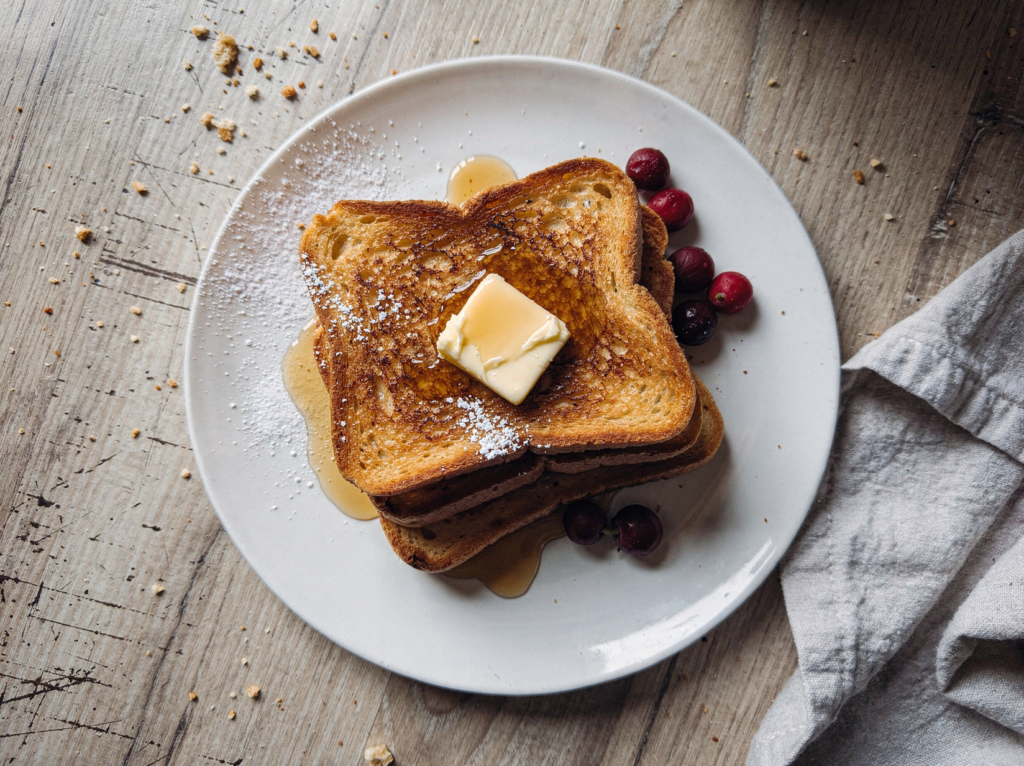
French toast is the kind of breakfast that turns an ordinary morning into a small celebration. At its heart it is just bread dipped in seasoned eggs and milk, then cooked in butter, but the way it transforms is nothing short of wonderful. The custard soaks into the bread, the surface caramelizes into a lacy golden crust, and the inside stays soft and almost pudding like.
The trick that separates great French toast from soggy or scorched attempts comes down to three things, namely the bread you choose, the richness of the custard, and the heat of your pan. Get those right and you will produce slices that are crisp on the outside, custardy in the center, and fragrant with vanilla and cinnamon. It is honestly one of the most rewarding things you can cook for so little effort.
I grew up eating this on Sunday mornings, and the smell of butter and cinnamon hitting a hot griddle still feels like home. It is endlessly adaptable too, equally happy with a simple pour of maple syrup or piled high with berries and whipped cream. Kids love it, guests love it, and it uses pantry staples you likely already have.
There is also something deeply practical about French toast that makes it a smart choice for any cook. It rescues bread that is just past its prime, turning slices that would otherwise go stale into something everyone fights over. A loaf that has dried out on the counter is not a problem here; it is exactly what the recipe wants.
In the steps below I will show you how to build a properly rich custard, how long to soak the bread so it drinks up flavor without disintegrating, and exactly how to griddle it for that signature golden crust. Let us make the best French toast you have ever had.
Why you will love this
- Rich custard base: Adding cream alongside the milk makes the interior luxuriously soft and the flavor far more satisfying.
- Sturdy enriched bread: Brioche and challah have the structure to soak up custard without turning to mush.
- Proper soak time: Twenty seconds per side lets the custard penetrate deep without leaving the center raw or gummy.
- Butter on the griddle: Cooking in real butter gives a nutty flavor and the deep golden color you want.
- Warm oven hold: Resting finished slices in a low oven keeps everything hot and lets the centers fully set so you can serve the whole batch at once.
What you will need
French toast rewards good bread and a generous, well seasoned custard above all else. Everything here is simple, so let the quality of the bread, eggs, and vanilla carry the dish.
- Brioche or challah (8 slices): These enriched breads are tender yet sturdy, soaking up custard while holding their shape; slightly stale slices work best.
- Eggs (4 large): The eggs are the backbone of the custard, giving body and that signature soft set interior.
- Whole milk (1 cup): Milk thins the custard so it soaks evenly; whole milk brings the right balance of richness.
- Heavy cream (1/4 cup): A splash of cream makes the inside noticeably more custardy and decadent than milk alone.
- Vanilla extract (2 teaspoons): Use pure vanilla for warm, rounded flavor; imitation tastes flat by comparison.
- Ground cinnamon (1 teaspoon): Cinnamon gives French toast its cozy, classic aroma; add freshly grated nutmeg too if you like.
- Unsalted butter (3 tablespoons): Butter on the griddle browns the surface beautifully and adds flavor no oil can match.
Equipment: You will need a wide shallow dish for soaking, a whisk, a large nonstick skillet or griddle, a thin spatula, and a sheet pan for keeping slices warm.
How to make it, step by step
Step 1: Make the custard
In a wide shallow dish big enough to lay a slice of bread flat, crack in the eggs and add the milk, cream, sugar, vanilla, cinnamon, and salt. A pie plate or a shallow baking dish works perfectly, since it lets you soak slices flat instead of trying to dip them in a narrow bowl. Whisk everything together for at least 30 seconds until the mixture is completely smooth and the cinnamon is evenly distributed.
Take a moment to make sure no streaks of egg white remain, since those can cook into rubbery bits on your toast. The custard should look pale, uniform, and smell strongly of vanilla and cinnamon.
The ratio here matters more than people realize. Too many eggs and the toast tastes eggy and dense, while too much milk leaves the centers wet and unable to set. This balance of four eggs to a cup and a quarter of dairy gives you a custard that is rich but still cooks through cleanly.
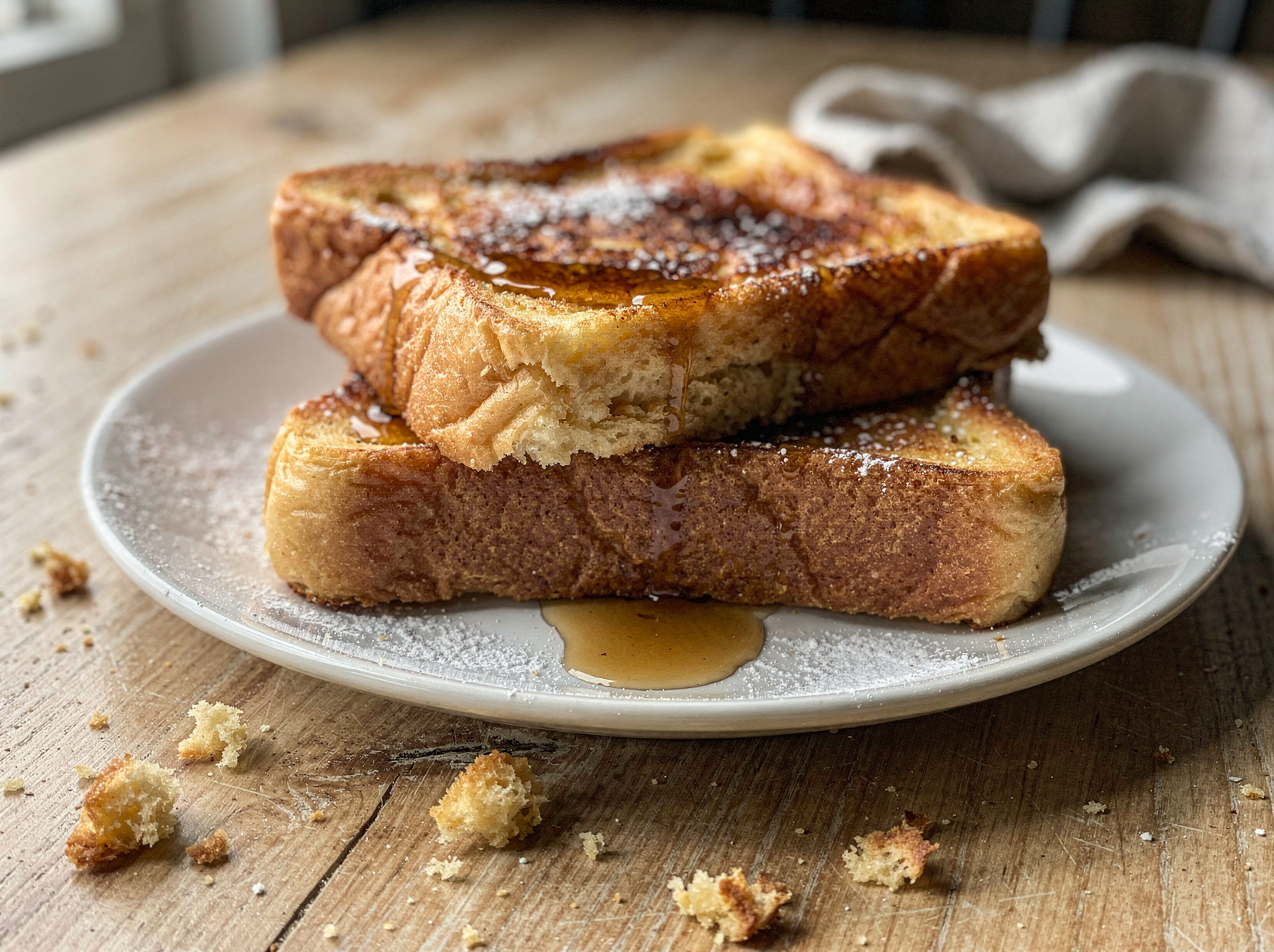
Step 2: Prep the bread and oven
If your bread is fresh, let the slices sit out for ten to fifteen minutes, or even toast them very lightly, so they are a bit dry. Slightly stale bread absorbs the custard far better and is much less likely to fall apart in the dish.
Set your oven to its lowest setting, around 200 degrees Fahrenheit, and slide in a sheet pan or wire rack. This is where your finished slices will stay warm and crisp while you work through the batch.
If you forgot to let your bread go stale, there is a quick fix. Lay the slices on a baking sheet and dry them in the warm oven for about ten minutes, flipping once. They do not need to toast or color, just lose a little of their moisture so they can drink up the custard.
Step 3: Soak each slice
Lay a slice of bread into the custard and let it rest for about 20 seconds, then carefully flip it and soak the other side for another 20 seconds. You want the bread saturated through but not so waterlogged that it tears or sags apart.
Thick enriched breads can take the full soak, while thinner or softer bread needs less time. Lift each slice and let the excess custard drip back into the dish before it goes to the pan.
The goal is for the custard to reach the very center of the slice without leaving it dripping. If you press gently on a soaked slice and it feels uniformly soft rather than firm in the middle, it has soaked enough and is ready to cook.
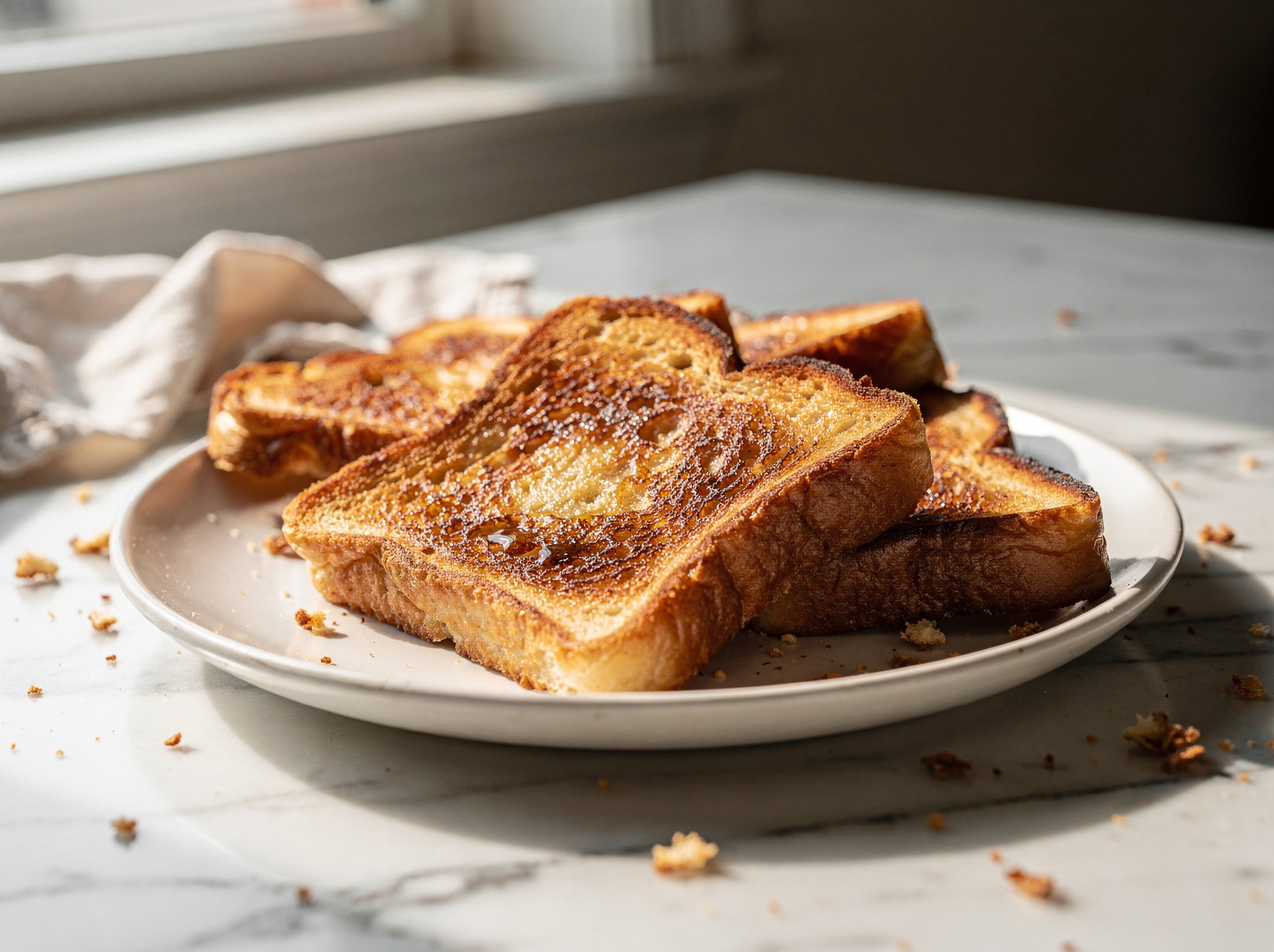
Step 4: Heat the griddle
Place a large nonstick skillet or griddle over medium heat and add about a tablespoon of butter. Let it melt and foam, swirling to coat the surface, but do not let it brown too darkly before the bread goes in.
Medium heat is the sweet spot here. Too hot and the outside scorches before the custard sets, while too low and the toast turns pale and greasy instead of crisp and golden.
A simple way to test the pan is to flick a drop of water onto the surface. If it sizzles and skitters gently rather than evaporating instantly, you are at the right temperature to lay in your first slices.
Step 5: Cook to golden brown
Lay the soaked slices into the foaming butter without crowding the pan, leaving a little space between each. Cook undisturbed for three to four minutes, until the underside is a deep, even golden brown and lifts easily with a spatula.
Flip each slice and cook the second side for another three to four minutes. Press gently in the center with your spatula; it should feel set and springy rather than wet or squishy, which tells you the custard has cooked through. Look for an even, deep golden color across the whole surface, since a uniformly browned slice means the sugars have caramelized properly.
Wipe the pan and add fresh butter between batches so the milk solids from the previous round do not burn. Adjust the heat down slightly if your slices are browning faster than the centers can cook.
Do not crowd the pan in an effort to go faster. Slices packed too close together steam each other and turn pale and soft instead of crisp, so cook in batches and keep a little breathing room between each piece for the best golden crust.
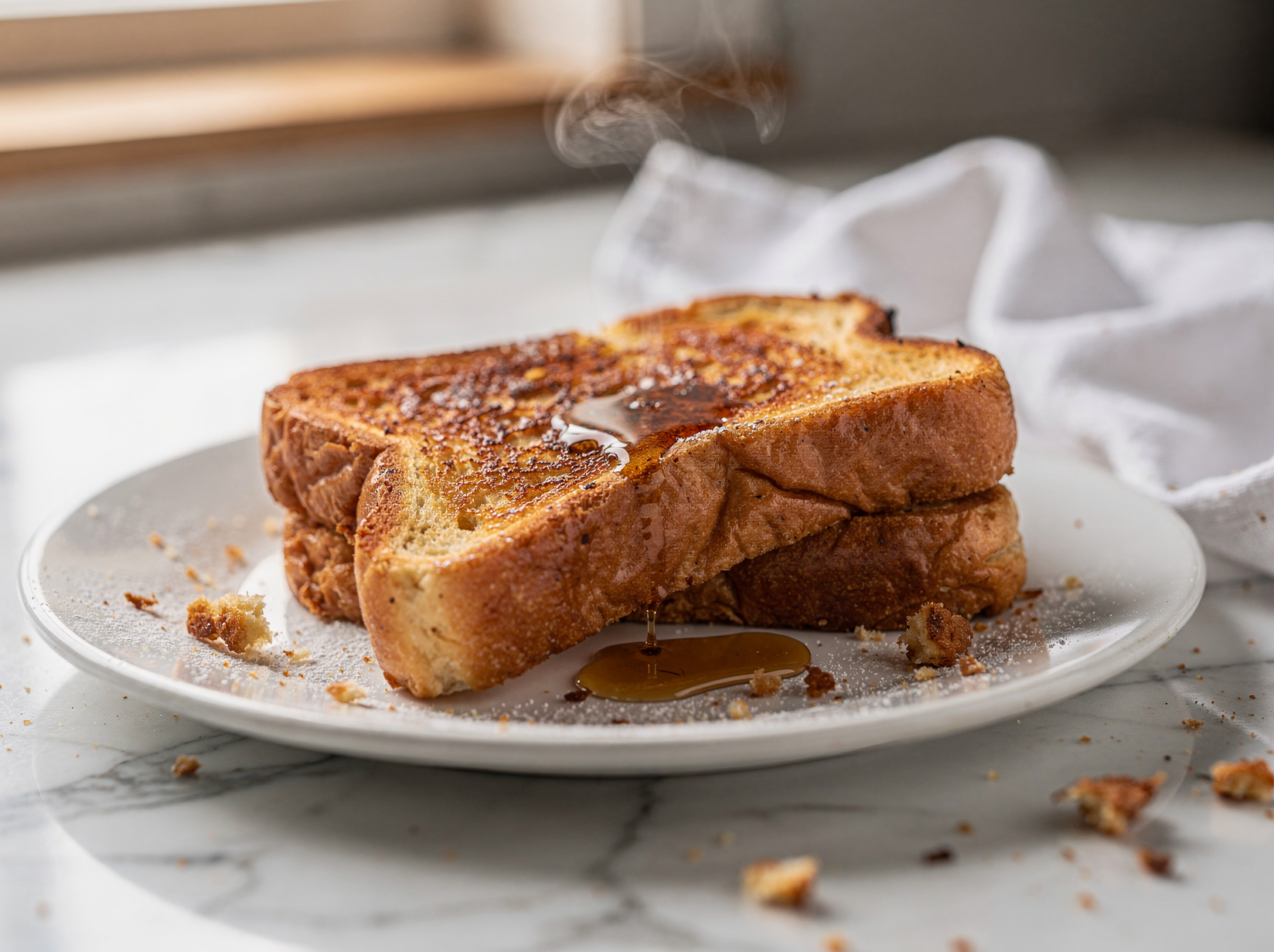
Step 6: Keep warm in the oven
Transfer each finished slice to the sheet pan in the warm oven as it comes off the griddle. This keeps everything hot and lets the residual heat finish setting the centers while you cook the remaining slices. The gentle warmth of the low oven is enough to hold the toast at temperature without drying it out or overcooking it.
Resist stacking the slices on top of each other, since that traps steam and softens the crisp surface. A single layer on a rack keeps the edges crisp until you are ready to serve the whole batch at once.
This hold step is also what makes French toast practical for feeding a crowd. Rather than serving slices one at a time as they come off the griddle, you can cook the entire batch and bring everyone hot, evenly cooked toast at the same moment.
Step 7: Serve it hot
Arrange the French toast on warm plates, dust generously with powdered sugar, and pour over plenty of real maple syrup. Add fresh berries, a pat of butter, or a cloud of whipped cream if you are feeling indulgent.
Serve right away while the outside is still crisp and the inside is warm and custardy. This is breakfast at its happiest, so call everyone to the table before it cools.
For a little restaurant flourish, warm your maple syrup in the microwave for a few seconds before pouring. Warm syrup soaks in more gently and keeps the whole plate hot, which makes a noticeable difference in the final experience.
Tips for the best results
- Use day old bread: Slightly stale slices soak up custard better and hold together far more reliably than fresh, soft bread.
- Do not skip the soak: A proper soak of about twenty seconds per side is what gives you that custardy center.
- Fresh butter each batch: Wipe the pan and add new butter between rounds so burnt milk solids do not muddy the flavor.
- Keep the heat moderate: Medium heat cooks the custard through before the surface burns, giving an even golden crust.
- Warm your syrup: Gently heating the maple syrup keeps the whole plate hot and tastes noticeably better.
Variations and substitutions
- Stuffed French toast: Sandwich two slices around sweetened cream cheese or jam before soaking and cooking.
- Orange and nutmeg: Add a teaspoon of orange zest and a pinch of nutmeg to the custard for a brighter flavor.
- Berry compote: Simmer mixed berries with a spoonful of sugar and spoon the warm sauce over the top.
- Overnight bake: Layer soaked slices in a baking dish, refrigerate overnight, and bake at 350 degrees until puffed and set.
How to store and reheat
Leftover French toast keeps well in an airtight container in the fridge for up to three days. Lay the slices flat with parchment between them so they do not stick together as they chill.
To freeze, arrange cooled slices on a sheet pan until solid, then transfer to a freezer bag for up to two months. Reheat straight from frozen in a 375 degree oven or a toaster until hot and crisp again, which restores the texture far better than a microwave.
What to serve it with
- Drizzle with warm maple syrup and butter
- Top with fresh berries and whipped cream
- Dust with powdered sugar and a squeeze of lemon
- Serve with crispy bacon for a sweet and salty plate
Frequently asked questions
Sturdy enriched breads like brioche and challah are ideal because they are tender but strong enough to hold custard without falling apart. Thick cut white bread, Texas toast, and even day old French bread also work well. Avoid thin or very soft sandwich bread, which tends to turn mushy.
A soggy center usually means the heat was too high, so the outside browned before the inside could cook through. Lower your pan to medium heat and give each slice the full three to four minutes per side. Using slightly stale bread and finishing slices in a warm oven also helps the custard set.
Yes, you can whisk the custard the night before and store it covered in the fridge for up to a day. Give it a quick stir before using since the cinnamon may settle. You can also soak and bake an entire overnight casserole version for a hands off morning.
About twenty seconds per side is the sweet spot for most thick slices. You want the bread saturated through to the center but not so wet that it tears when you lift it. Thinner or softer bread needs less time, while very dense bread can soak a little longer.
Absolutely, and it freezes beautifully. Cool the cooked slices completely, freeze them flat on a tray, then store them in a freezer bag for up to two months. Reheat straight from frozen in the oven or toaster to bring back the crisp edges.
Classic French Toast
Thick slices of bread soaked in a vanilla cinnamon custard and griddled until golden, crisp outside and tender within.
Ingredients
- 8 thick slices brioche or challah, about 3/4 inch thick
- 4 large eggs
- 1 cup whole milk
- 1/4 cup heavy cream
- 2 tablespoons granulated sugar
- 2 teaspoons pure vanilla extract
- 1 teaspoon ground cinnamon
- 1/4 teaspoon kosher salt
- 3 tablespoons unsalted butter, for the griddle
- Maple syrup and powdered sugar, for serving
Instructions
- Whisk eggs, milk, cream, sugar, vanilla, cinnamon, and salt in a wide shallow dish until fully blended.
- Soak each slice of bread in the custard for about 20 seconds per side, letting it absorb without falling apart.
- Melt some butter on a griddle or skillet over medium heat until it foams.
- Cook the soaked slices for 3 to 4 minutes per side until deep golden brown and set in the middle.
- Keep finished slices warm in a low oven while you cook the rest.
- Serve hot with maple syrup, a dusting of powdered sugar, and any toppings you like.
Notes
- Slightly stale bread soaks up custard better and holds its shape, so day old loaves are ideal.
- Keep the heat at medium so the custard cooks through before the outside burns.