
Creamy Garlic Shrimp Pasta
 By Janet Homme · Updated May 15, 2026
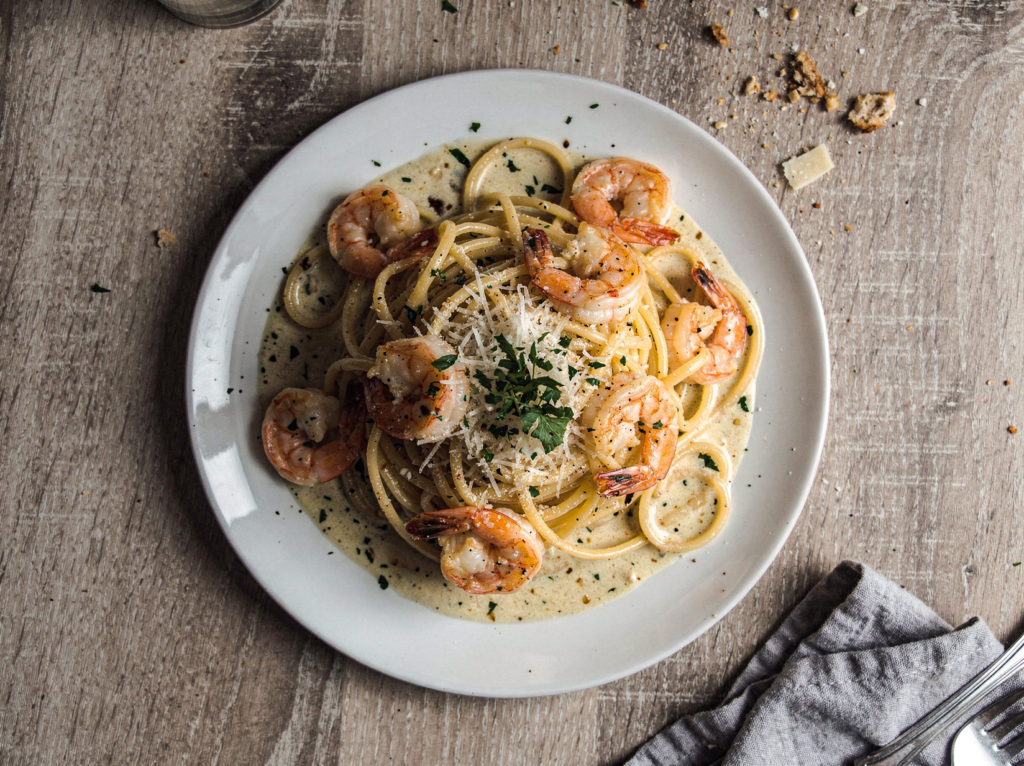
Creamy garlic shrimp pasta is the dish I make when I want something that feels indulgent but cannot face a long night at the stove. It has the richness of a restaurant plate of fettuccine alfredo, but the shrimp make it feel like a real meal rather than just a bowl of cream and noodles. From start to finish it takes about as long as the pasta water needs to boil and the noodles need to cook.
The magic here lives in two small techniques that most home cooks skip. The first is searing the shrimp hard and fast so they stay sweet and snappy rather than turning to rubber. The second is using starchy pasta water to loosen and emulsify the cream sauce so it turns glossy and clings to every strand instead of sliding off.
I keep the flavors clean and bright on purpose. There is plenty of garlic, a whisper of red pepper heat, a splash of white wine for acidity, and a squeeze of lemon at the end to keep the cream from feeling heavy. The parsley is not just garnish; it cuts through the richness and makes the whole bowl taste fresher.
Cream sauces have a reputation for being fussy and prone to breaking, but the truth is they are quite stable once you understand the two things that wreck them. Boiling the cream too hard can cause it to split, and adding cheese over high heat makes it seize into grainy clumps. Keep the heat gentle and add the cheese gradually, and the sauce will stay silky every single time.
In the steps below I will show you exactly when to pull the shrimp, how to build the sauce so it never breaks, and the order to combine everything so nothing overcooks. Once you have the rhythm down, this becomes a fifteen minute show stopper for any weeknight. It is the kind of dish that makes people think you fussed for hours when you really did not.
Why you will love this
- Fast and impressive: It looks and tastes like something you would order out, yet it comes together in under thirty minutes with one pan and one pot.
- Perfectly cooked shrimp: Searing the shrimp separately and removing them early guarantees they stay tender and sweet instead of overcooking in the sauce.
- A sauce that clings: Reserved pasta water emulsifies the cream and cheese into a silky coating that hugs every noodle rather than pooling at the bottom.
- Balanced richness: White wine and a finishing squeeze of lemon brighten the cream so the dish feels luxurious without being cloying or one note.
- Minimal cleanup: One skillet does the shrimp and the sauce, so you are left with just a pot and a pan when dinner is done.
- Restaurant quality at home: The same techniques a good Italian kitchen uses, searing the protein separately and emulsifying with pasta water, are simple to pull off in your own kitchen.
What you will need
This is a short ingredient list where quality genuinely matters. A good block of Parmesan, fresh garlic, and properly thawed shrimp make the difference between a memorable bowl and a merely fine one.
- Shrimp (1 lb): Large or extra large, peeled and deveined, work best because they sear quickly without overcooking. If using frozen, thaw them overnight in the fridge and pat completely dry so they brown instead of steam.
- Heavy cream (1 1/4 cups): Full fat cream is essential for a stable sauce that will not curdle when it simmers. Half and half can break and lacks the body you want.
- Parmesan (3/4 cup): Always grate it fresh from a wedge of real Parmigiano Reggiano; the pre grated kind contains starches that keep it from melting into the sauce smoothly.
- Garlic (6 cloves): Six cloves sounds like a lot but it mellows into sweetness as it softens in butter. Mince it finely so it cooks evenly and never turns bitter.
- Dry white wine (1/2 cup): Use something crisp and dry like Pinot Grigio or Sauvignon Blanc to deglaze and add acidity. Substitute a splash of broth plus a little extra lemon if you prefer to skip the wine.
- Fettuccine (12 oz): A wide, flat noodle holds creamy sauce beautifully. Linguine or even penne work too, but avoid anything too thin that the sauce would overwhelm.
Equipment: You need a large pot for the pasta, a wide deep skillet for the shrimp and sauce, a fine grater for the cheese, and tongs for tossing.
How to make it, step by step
Step 1: Boil the pasta
Bring a large pot of water to a rolling boil and salt it generously until it tastes like the sea. Add the fettuccine and cook it one minute shy of the package directions for al dente, since it will finish in the sauce.
Just before draining, dip a measuring cup into the pot and reserve a full cup of the starchy cooking water. That cloudy liquid is your secret weapon for a glossy sauce, so set it aside where you will not forget it.
Drain the pasta but do not rinse it. The surface starch helps the sauce grip the noodles later, and rinsing washes away exactly the coating you want to keep.
Time the pasta so it finishes around the same moment your sauce is ready. Pasta sitting in a colander clumps and cools quickly, so it is better to have the sauce waiting on the noodles than the other way around.
Step 2: Sear the shrimp
Pat the shrimp thoroughly dry and season them all over with salt and black pepper. Drying is what lets them brown rather than steam, so do not rush this part.
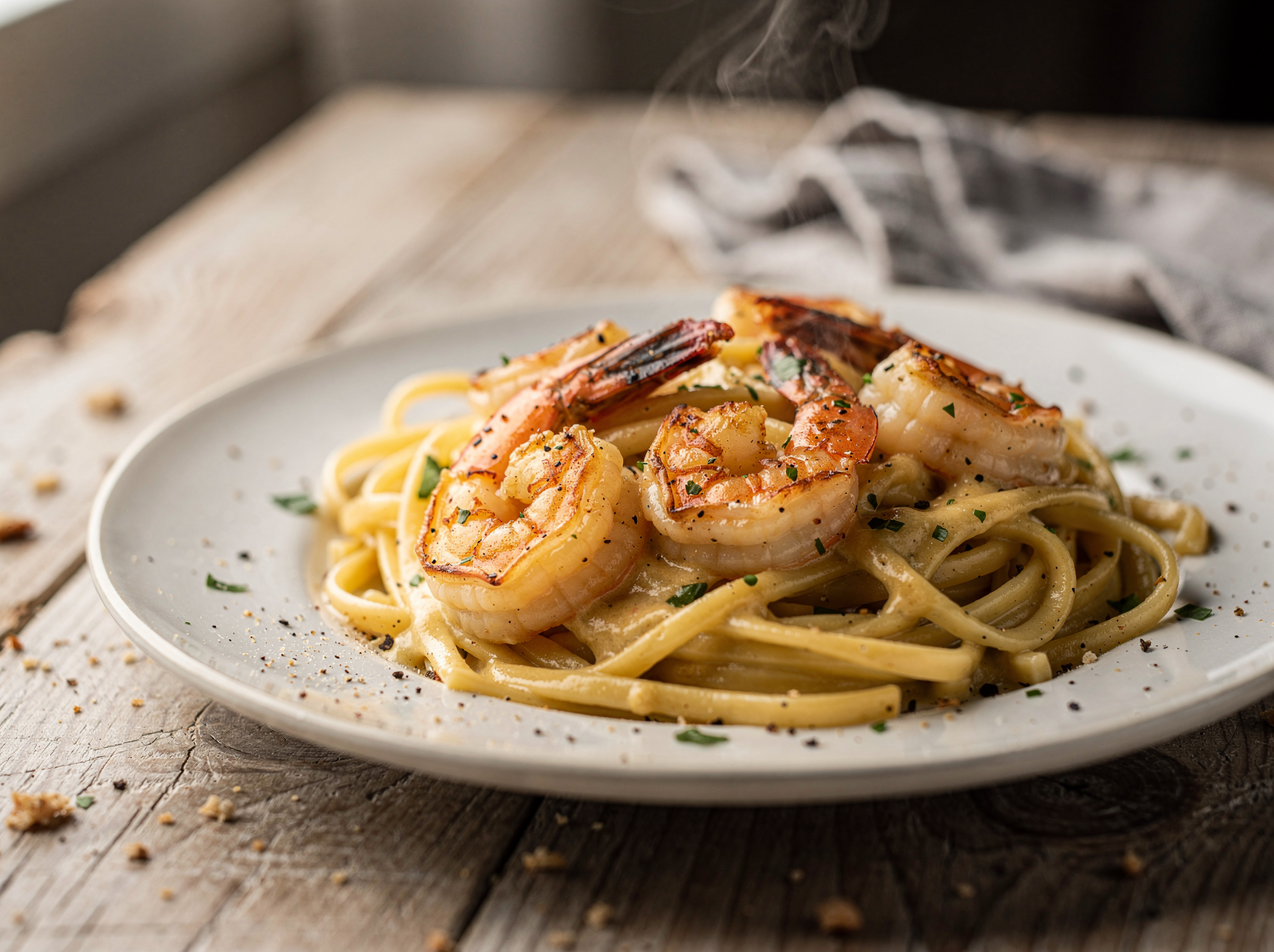
Heat one tablespoon of olive oil and one tablespoon of butter in a large skillet over medium high until the butter foams. Lay the shrimp in a single layer and sear for about ninety seconds on the first side until pink and lightly golden underneath.
Flip and cook just thirty to sixty seconds more, until the shrimp curl into a loose C shape and are barely opaque in the center. Transfer them to a plate right away; they will finish cooking when they return to the sauce.
Step 3: Soften the garlic
Lower the heat to medium and add the remaining tablespoon of olive oil and one tablespoon of butter to the same skillet. Scrape up any browned shrimp bits stuck to the bottom, because that is pure flavor.
Add the minced garlic and red pepper flakes and cook, stirring constantly, for about a minute until the garlic is fragrant and just barely golden. Keep it moving so it softens and sweetens rather than scorching.
Six cloves may look like a lot, but gentle cooking mellows raw garlic into something sweet and nutty rather than sharp. This is the aromatic foundation of the whole sauce, so give it your full attention for that minute.
Step 4: Deglaze with wine
Pour in the white wine and let it bubble vigorously, scraping the pan as it reduces. Cook for two to three minutes until the wine has reduced by about half and the sharp alcohol smell has cooked off.
This step builds the backbone of the sauce and adds the acidity that keeps the cream from tasting flat. You want it concentrated, not watery, before the cream goes in.
If you are skipping the wine, use broth in its place but add a little extra lemon at the end to make up for the lost acidity. Cream without something bright to balance it can taste heavy and dull on the palate.
Step 5: Build the cream sauce
Pour in the heavy cream and bring it to a gentle simmer, stirring occasionally. Let it bubble softly for three to four minutes until it thickens just enough to coat the back of a spoon.
Reduce the heat to low and add the grated Parmesan in two or three additions, whisking after each until it melts smoothly into the sauce. Adding it gradually off a hard boil keeps the cheese from clumping or turning grainy.
Taste and season with salt and pepper. The sauce should be rich and velvety; if it looks too thick, you will loosen it with pasta water in the next step.
Step 6: Toss with the pasta
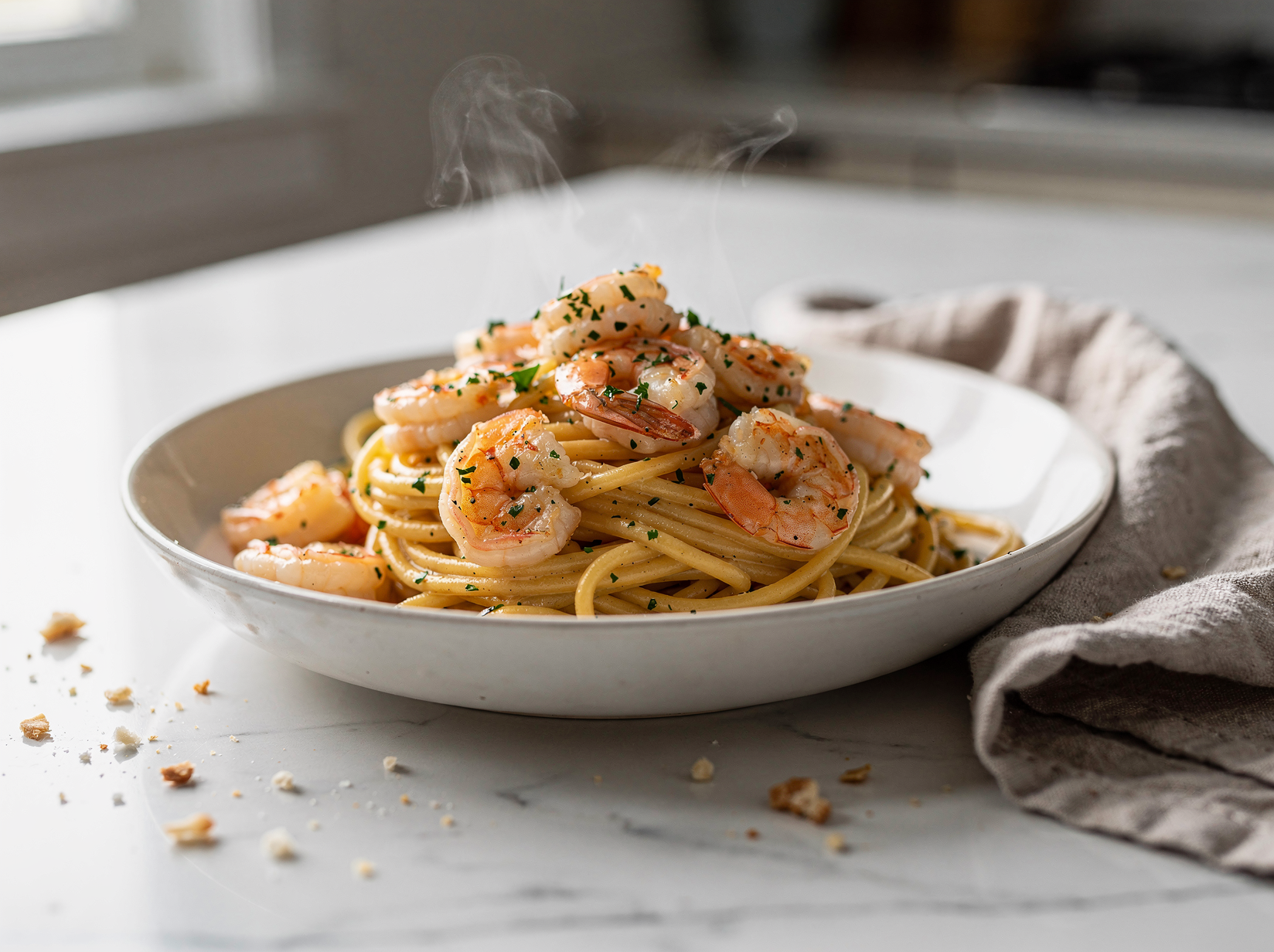
Add the drained pasta directly to the skillet and toss with tongs to coat every strand. Splash in pasta water a few tablespoons at a time, tossing constantly, until the sauce turns glossy and clings to the noodles.
The starch in that water emulsifies the sauce and is what gives it that professional, silky finish. Keep adding small amounts until the consistency looks luxurious rather than gloppy or dry.
Tossing the pasta in the pan for a minute or two also lets the noodles drink in some of the sauce, which deepens the flavor. This brief marriage on the heat is what separates a cohesive plate of pasta from sauce sitting on top of plain noodles.
Step 7: Finish with shrimp and lemon
Return the seared shrimp and any juices on the plate to the skillet and fold them gently into the pasta. Cook for just a minute, only long enough to warm the shrimp through and let them finish in the residual heat.
Turn off the heat and stir in the fresh lemon juice and most of the chopped parsley. The lemon lifts the whole dish and keeps the cream from feeling heavy on the palate.
Give it one final taste for salt and adjust if needed. The shrimp should be just cooked, the sauce glossy, and the flavors bright and balanced.
Step 8: Serve
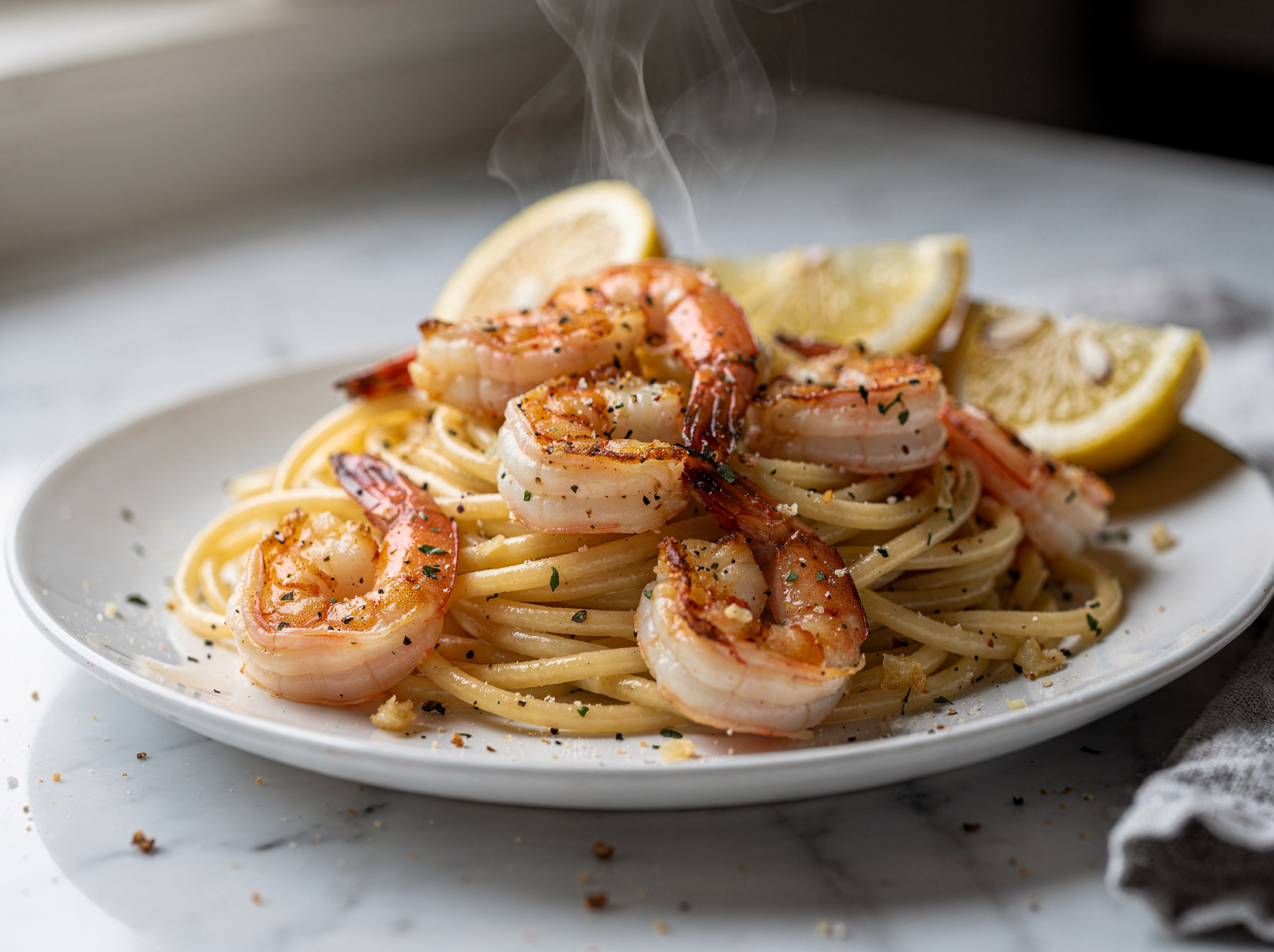
Divide the pasta among warm bowls and twirl it into neat nests if you are feeling fancy. Top each serving with the remaining parsley and an extra shower of grated Parmesan.
Serve immediately, because cream sauces are at their best the moment they leave the pan. A crack of black pepper and a wedge of lemon on the side never hurt.
Tips for the best results
- Dry the shrimp well: Surface moisture is the enemy of a good sear, so pat the shrimp dry before seasoning or they will steam and turn rubbery.
- Pull the shrimp early: Take them off the heat at a loose C shape; a tightly curled O means they are overcooked and tough.
- Grate your own cheese: Pre shredded Parmesan is coated to prevent clumping, which is exactly what stops it from melting into a smooth sauce.
- Save the pasta water: That starchy liquid is what emulsifies the sauce and makes it cling, so always reserve more than you think you need.
- Add cheese off the boil: Whisk the Parmesan in over low heat so it melts gently instead of seizing into grainy clumps.
Variations and substitutions
- Add greens: Wilt a few handfuls of baby spinach or some halved cherry tomatoes into the sauce just before adding the pasta.
- Cajun shrimp: Toss the shrimp in a tablespoon of Cajun seasoning before searing for a smoky, spicy version.
- Lighter sauce: Swap half the cream for additional pasta water and a touch more Parmesan for a brothier, less rich result.
- Swap the protein: Use sliced chicken breast or sea scallops in place of the shrimp, adjusting the sear time so they cook through.
How to store and reheat
Store leftovers in an airtight container in the refrigerator for up to two days. Cream sauces tighten as they chill, so the pasta will look thick and dense when cold, which is normal.
I do not recommend freezing this dish, as cream based sauces tend to separate and turn grainy when thawed. To reheat, warm it gently in a skillet over low heat with a splash of cream or milk, stirring until the sauce loosens and the shrimp are just warmed through.
What to serve it with
- With warm garlic bread for sopping up the sauce
- Alongside a crisp Caesar or arugula salad
- Paired with a chilled glass of the same white wine
- Topped with extra Parmesan and cracked black pepper
Frequently asked questions
Use full fat heavy cream and keep the heat at a gentle simmer rather than a hard boil. Add the cheese off the boil over low heat, and finish with the lemon juice only after you remove the pan from the heat so the acid does not split the warm cream.
Absolutely, frozen shrimp are often fresher than thawed shrimp at the counter. Thaw them overnight in the refrigerator or under cold running water, then pat them completely dry before searing so they brown rather than steam.
Replace the wine with an equal amount of chicken broth and add an extra teaspoon of lemon juice at the end to restore the acidity. The sauce will be slightly less complex but still delicious.
Cream sauce thickens as it sits, so loosen it with reserved pasta water a splash at a time until it coats the noodles glossily. If it is too thin, let it simmer a minute longer before adding the pasta to reduce and concentrate it.
Yes, simply use your favorite gluten free pasta and reserve some of its cooking water just as you would with regular pasta. The cream sauce itself contains no flour, so the rest of the recipe stays the same.
Creamy Garlic Shrimp Pasta
Plump seared shrimp folded into a silky garlic parmesan cream sauce clinging to hot pasta, ready in under thirty minutes.
Ingredients
- 12 oz fettuccine or linguine
- 1 lb large shrimp, peeled and deveined, tails removed
- Kosher salt and freshly ground black pepper
- 2 tbsp olive oil, divided
- 3 tbsp unsalted butter, divided
- 6 cloves garlic, minced
- 1/4 tsp red pepper flakes
- 1/2 cup dry white wine
- 1 1/4 cups heavy cream
- 3/4 cup freshly grated Parmesan cheese, plus more for serving
- 1 cup reserved pasta water
- 2 tbsp fresh parsley, chopped
- 1 tbsp fresh lemon juice
Instructions
- Boil the pasta in well salted water until just shy of al dente; reserve a cup of the cooking water before draining.
- Season the shrimp and sear in olive oil and butter, about 90 seconds per side, then remove.
- Soften the garlic and red pepper flakes in butter, then deglaze with white wine and reduce by half.
- Pour in the cream, simmer to thicken slightly, then whisk in the Parmesan until smooth.
- Add the drained pasta and a splash of pasta water, tossing until the sauce coats every strand.
- Fold the shrimp back in, finish with lemon juice and parsley, and serve at once.
Notes
- Grate the Parmesan yourself; the anti caking agents in pre shredded cheese keep it from melting smoothly.
- Pull the shrimp off the heat the moment they curl into a loose C, since an O shape means they are already overcooked.
- The starchy pasta water is what marries the sauce to the noodles, so do not forget to reserve some.