
Teriyaki Chicken Bowls
 By Sofia Reyes · Updated June 8, 2026
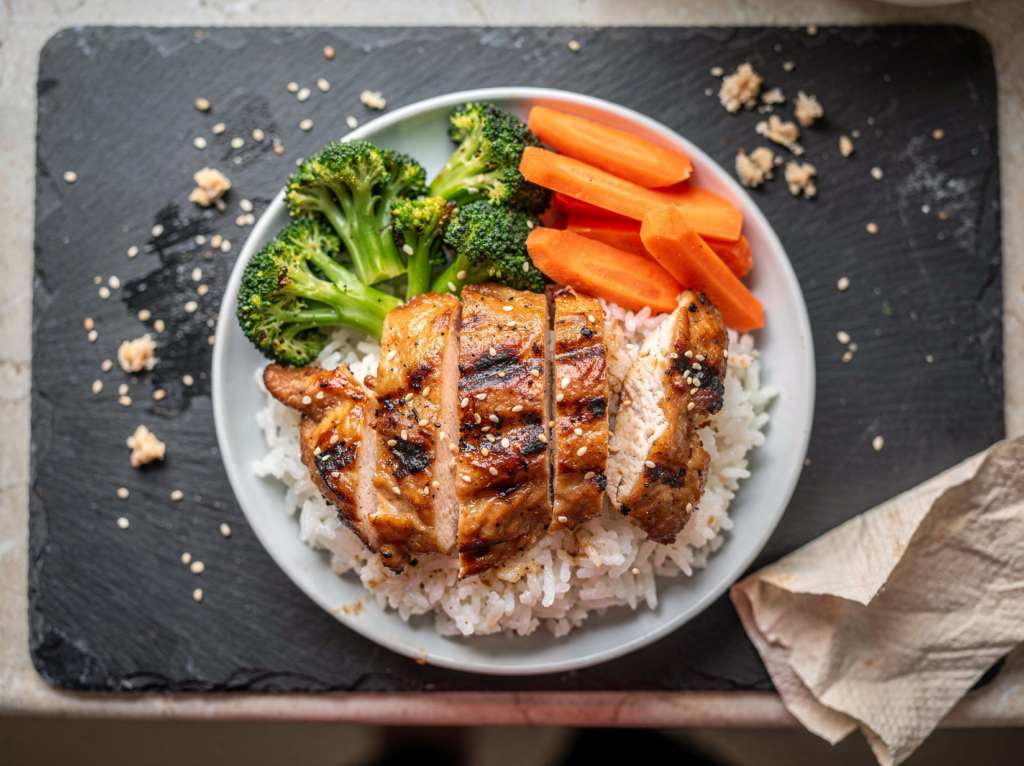
Teriyaki chicken bowls are my answer to the eternal weeknight question of what to make that everyone will actually eat. They hit every note at once, savory and sweet glazed chicken, fluffy rice, and crunchy fresh vegetables, all in one satisfying bowl. Better still, the homemade teriyaki sauce takes minutes and tastes worlds better than anything poured from a bottle.
The word teriyaki refers to the technique, a glaze of soy sauce, mirin, and sugar reduced until glossy and brushed over grilled or pan seared meat. Once you understand that, you realize how simple the real thing is and how unnecessary the thick, gloopy bottled versions are. A handful of pantry staples reduces into a sauce that clings to the chicken like lacquer.
I build these bowls around boneless chicken thighs because they stay juicy and forgiving even if you walk away from the stove for a minute. They take a hard sear beautifully, developing a deep brown crust that gives the sweet glaze something to hold onto. Sliced and fanned over rice, they look as good as they taste.
What I love most about a bowl format is how it balances rich and fresh in every bite. The glazed chicken and warm rice are comforting and savory, while the cool cucumber, crunchy carrot, and bright edamame keep things light. That contrast is what makes these bowls feel satisfying without ever feeling heavy.
Below I will show you how to whisk together a balanced teriyaki sauce, sear the chicken for maximum flavor, reduce the glaze to the right consistency, and assemble bowls that feel fresh rather than heavy. These also happen to be excellent for meal prep, holding up beautifully through the week. Make a double batch on Sunday and your weekday lunches sort themselves out.
Why you will love this
- Real homemade teriyaki: Soy sauce, mirin, and sugar reduced into a glossy glaze taste fresher and more balanced than any bottled sauce thick with corn syrup.
- Juicy thighs: Boneless thighs stay tender and forgiving where breasts dry out, and they take a deep sear that anchors the sweet glaze.
- A complete meal in a bowl: Protein, rice, and crisp vegetables come together in one dish that is filling without feeling heavy.
- Great for meal prep: The components store and reheat well, so a single session sets you up with lunches and dinners for days without any soggy results.
- Fully customizable: Swap the vegetables, adjust the sweetness, or change the protein and the formula still works every time.
- Balanced and satisfying: The mix of glazed protein, warm rice, and crisp raw vegetables hits comforting and fresh notes in the very same bite.
What you will need
The sauce comes from a few Japanese pantry staples that are worth keeping on hand, and the rest is fresh chicken, rice, and whatever crunchy vegetables you like. Each one earns its place in the bowl.
- Chicken thighs (1 1/2 lb): Boneless skinless thighs are juicier and more flavorful than breasts and far harder to overcook. If you only have breasts, pound them to an even thickness and watch the heat closely.
- Soy sauce (1/2 cup): Low sodium is best so the reduced glaze does not turn punishingly salty. It forms the savory backbone of the teriyaki.
- Mirin (3 tbsp): A sweet Japanese rice wine that gives teriyaki its characteristic glossy sweetness and gentle tang. If you cannot find it, use a tablespoon of rice vinegar plus a little extra sugar.
- Brown sugar and honey: Together they provide the sweetness that balances the salty soy and helps the glaze caramelize and cling. Adjust to taste depending on how sweet you like it.
- Fresh ginger and garlic (grated): Grating rather than mincing releases their juices into the sauce for a brighter, more aromatic flavor. Bottled versions will not give you the same lift.
- Short grain white rice (2 cups cooked): Its slight stickiness holds together in the bowl and soaks up the extra glaze. Jasmine rice works too if that is what you have.
- Edamame, carrots, and cucumber: These provide the fresh, crunchy counterpoint to the rich glazed chicken. Buy shelled edamame for convenience and shred the carrots finely so they tangle nicely with the rice.
- Toasted sesame seeds and scallions: These finishing touches add nutty aroma, a pop of color, and a final layer of fresh flavor. Toast the seeds in a dry pan for a minute if they are not already toasted to deepen their flavor.
Equipment: You need a large skillet, a small bowl for the sauce, a whisk, a small dish for the cornstarch slurry, and a pot or rice cooker for the rice.
How to make it, step by step
Step 1: Make the teriyaki sauce
In a small bowl, whisk together the soy sauce, the quarter cup of water, the mirin, brown sugar, honey, grated garlic, and grated ginger. Stir until the sugar dissolves into a smooth, fragrant liquid.
In a separate small dish, stir the cornstarch into the two tablespoons of water until smooth to make a slurry. Set both aside, keeping them apart until the cooking begins.
Tasting the sauce now is worth a moment. It should be assertively savory and salty since it will mellow once it coats the chicken and rice, so do not be alarmed if the raw sauce tastes a touch strong on its own.
Step 2: Prep the chicken
Pat the chicken thighs thoroughly dry with paper towels, which is essential for a good sear. Season both sides generously with salt and pepper.
If the thighs are very uneven in thickness, open out any thick folds so they lie flat and cook at the same rate. Drying and even thickness are the two small steps that lead to a deep, even crust.
There is no need to marinate the chicken ahead of time, which is part of what makes this so quick. The flavor comes from searing and then glazing, so a simple seasoning of salt and pepper is all the chicken needs before it hits the pan.
Step 3: Sear the chicken
Heat the oil in a large skillet over medium high until it shimmers. Lay the thighs in smooth side down and let them cook undisturbed for about five to six minutes, until the underside is deeply golden brown.
Flip the thighs and cook the other side for another four to five minutes, until the chicken is cooked through and reaches 175 degrees Fahrenheit at the thickest point. Thighs are best at this slightly higher temperature, where the connective tissue softens and the meat turns silky.
Resist moving the chicken around while it sears; that undisturbed contact with the hot pan is what builds the brown crust that makes the dish taste so good.
Step 4: Glaze the chicken
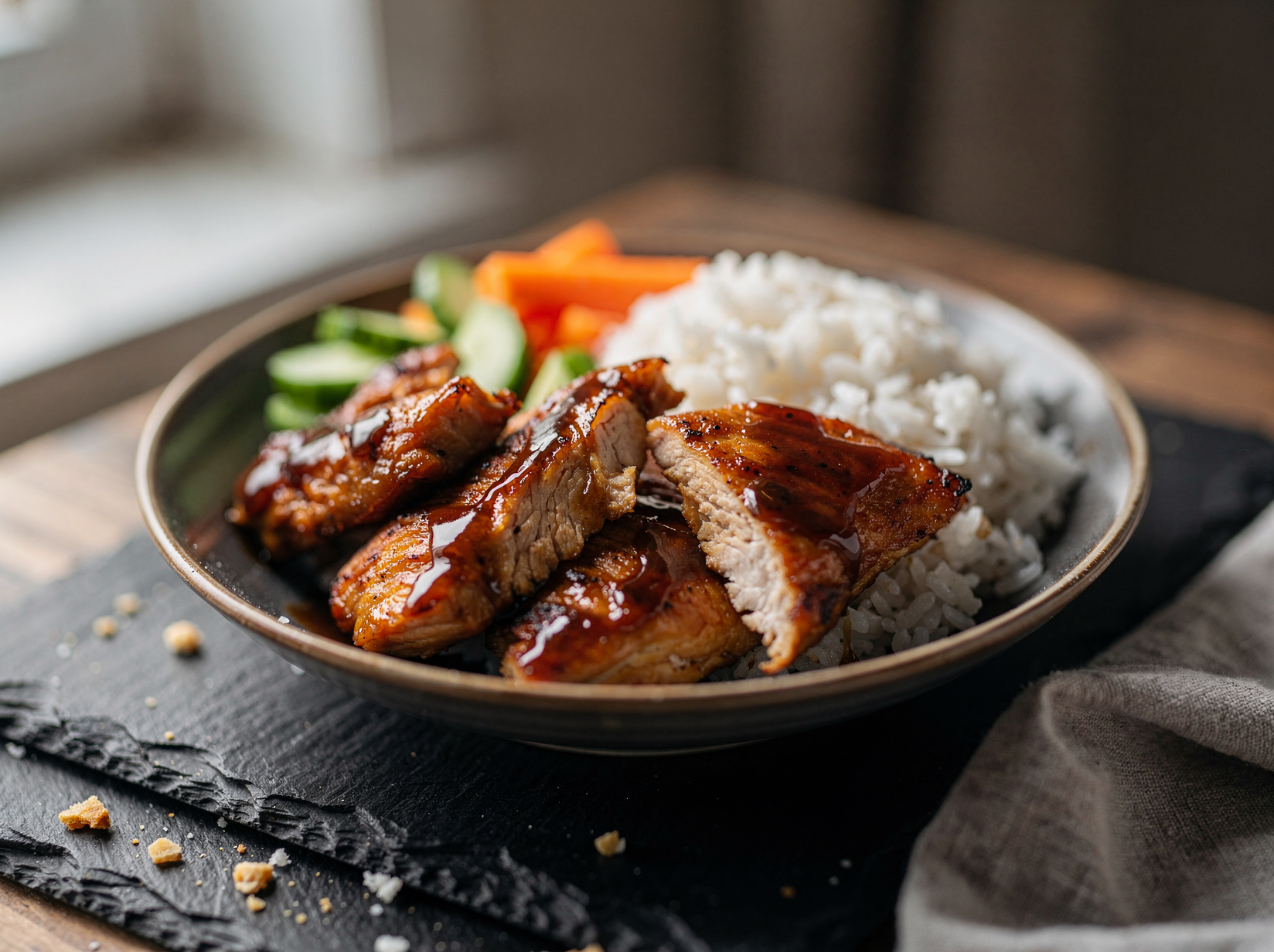
Reduce the heat to medium and pour the teriyaki sauce into the skillet around the chicken. Let it come to a simmer, scraping up any browned bits from the bottom of the pan.
Give the cornstarch slurry a quick stir and pour it in, then simmer for one to two minutes, stirring, until the sauce thickens into a glossy glaze that coats the back of a spoon.
Turn the thighs to coat them all over in the glaze, spooning it over the tops until every piece is shiny and lacquered. Take the pan off the heat once the glaze clings nicely.
The glaze will continue to thicken as it cools, so err on the side of pulling it slightly looser than you think you want. If it ever turns too thick, a splash of water loosens it right back to a pourable, glossy consistency.
Step 5: Rest and slice the chicken
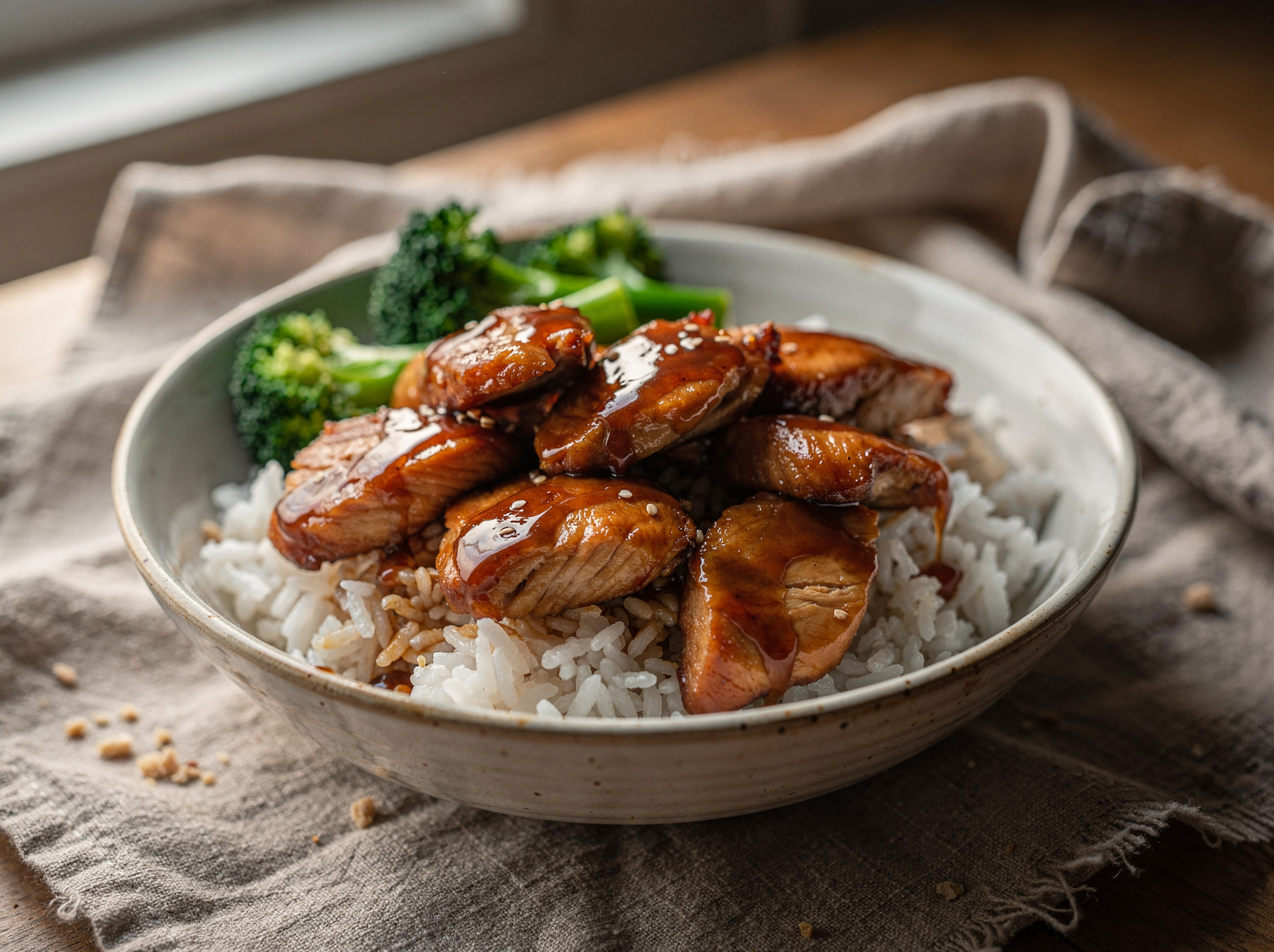
Transfer the glazed thighs to a cutting board and let them rest for about five minutes. Resting lets the juices settle back into the meat so they do not run out when you cut.
Slice the chicken crosswise into half inch strips. Keep any glaze left in the pan, because you will drizzle it over the assembled bowls.
Slicing the chicken rather than serving whole thighs spreads the glaze and flavor across more of each bite. It also makes the bowls look more inviting, with neat fanned strips rather than a single heavy piece.
Step 6: Prep the vegetables and rice
While the chicken rests, get the bowl components ready. Steam the edamame if it is not already cooked, shred the carrots, slice the cucumber thinly, and thinly slice the scallions.
Fluff the cooked short grain rice with a fork so it is light and ready to serve. Having everything prepped and at the ready makes assembly quick and the bowls look their best.
Feel free to use whatever crisp vegetables you have on hand here. The point is to provide cool, fresh crunch against the warm glazed chicken, so snap peas, pickled onion, or shredded cabbage all slot in nicely.
Step 7: Assemble the bowls
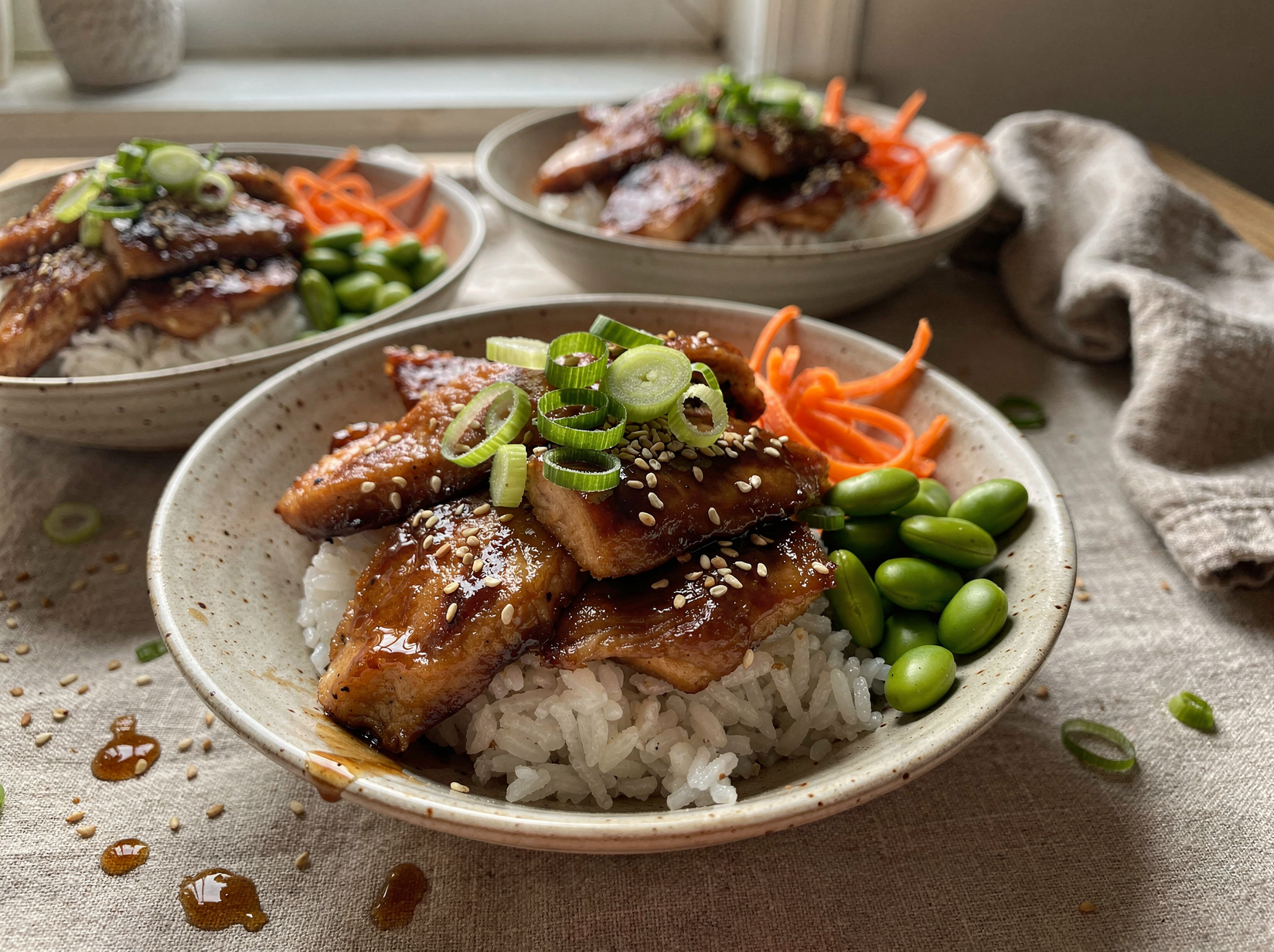
Divide the warm rice among four bowls as the base. Arrange the edamame, shredded carrots, and sliced cucumber in neat sections around the edge.
Fan the sliced teriyaki chicken over the center of each bowl. Drizzle any reserved glaze from the pan over the chicken and rice so the flavor reaches every bite.
The contrast of glossy warm chicken, fluffy rice, and cool crisp vegetables is what makes these bowls so satisfying. Build them with a little care and they look as good as a takeout shop.
Arranging the components in distinct sections rather than tossing everything together keeps each element tasting like itself. It also lets everyone at the table see exactly what they are eating, which is a nice touch when you are feeding picky eaters.
Step 8: Garnish and serve
Scatter the sliced scallions and toasted sesame seeds over the top of each bowl. These add a final pop of color, freshness, and nutty crunch.
Serve the bowls right away while the chicken is warm and the vegetables are crisp. A dab of sriracha or a squeeze of lime on the side is a great option for anyone who wants more punch.
Tips for the best results
- Use thighs over breasts: Thighs stay juicy and are nearly impossible to dry out, which makes them far more forgiving under a sweet glaze.
- Dry the chicken first: Pat the thighs dry before seasoning so they develop a deep brown crust instead of steaming in the pan.
- Do not crowd the pan: Sear in batches if your skillet is small, since crowding traps steam and prevents proper browning.
- Watch the glaze closely: The sauce goes from perfectly glossy to overly thick and sticky in moments once the slurry hits, so pull it off the heat promptly.
- Cook thighs a bit higher: Take thighs to 175 degrees rather than 165, where the connective tissue melts and the meat turns tender rather than tough.
Variations and substitutions
- Pineapple teriyaki: Add a splash of pineapple juice to the sauce and grill a few pineapple rings to tuck into the bowls.
- Spicy version: Stir a tablespoon of sriracha or chili crisp into the glaze for a sweet heat balance.
- Different protein: Swap the chicken for salmon fillets, tofu, or thin sliced steak, adjusting the sear time to suit.
- Vegetable swap: Use steamed broccoli, snap peas, or pickled red onion in place of the carrots and cucumber for a different crunch.
How to store and reheat
Store the components separately in airtight containers in the refrigerator for up to four days, which makes this an ideal meal prep recipe. Keeping the rice, chicken, and fresh vegetables apart keeps everything at its best texture.
The glazed chicken and rice freeze well for up to two months, though I would add fresh vegetables only after thawing. Reheat the chicken and rice gently in the microwave or a covered skillet with a splash of water, then assemble with cold crisp vegetables just before eating.
What to serve it with
- Over fluffy short grain or jasmine rice
- With a side of miso soup
- Topped with a soft jammy egg
- With pickled ginger or quick pickled cucumber on the side
Frequently asked questions
Yes, though breasts dry out more easily. Pound them to an even thickness, sear over slightly lower heat, and pull them at 165 degrees Fahrenheit so they stay moist before glazing.
In my view, absolutely. Homemade teriyaki is just soy sauce, mirin, and sugar reduced into a glaze, so it tastes brighter and more balanced than bottled versions that lean heavily on corn syrup and thickeners. It also takes only a few minutes to make.
If you cannot find mirin, substitute a tablespoon of rice vinegar plus an extra teaspoon of sugar, or use a dry sherry with a touch more honey. The goal is to replace the gentle sweetness and acidity that mirin brings.
A simple cornstarch slurry does the job. Stir cornstarch into cold water until smooth, then add it to the simmering sauce and cook for a minute or two until it turns glossy and coats the back of a spoon.
They are excellent for it. Cook the chicken, rice, and vegetables, then store each component separately in the fridge for up to four days and assemble fresh each day so the textures stay distinct and appealing.
Teriyaki Chicken Bowls
Juicy pan seared chicken thighs glazed in a glossy homemade teriyaki sauce, piled over rice with crisp vegetables.
Ingredients
- 1 1/2 lb boneless skinless chicken thighs
- Kosher salt and black pepper
- 1 tbsp neutral oil
- 1/2 cup low sodium soy sauce
- 1/4 cup water
- 3 tbsp mirin
- 3 tbsp brown sugar
- 1 tbsp honey
- 2 cloves garlic, grated
- 1 tsp fresh ginger, grated
- 1 tbsp cornstarch
- 2 tbsp water (for the slurry)
- 2 cups cooked short grain white rice
- 1 cup shelled edamame, steamed
- 1 cup shredded carrots
- 1 cup sliced cucumber
- 2 scallions, thinly sliced
- 1 tbsp toasted sesame seeds
Instructions
- Whisk together the soy sauce, water, mirin, brown sugar, honey, garlic, and ginger for the teriyaki sauce.
- Season the chicken thighs and sear in a hot skillet until deeply golden and cooked through.
- Pour the sauce into the pan and simmer, then stir in a cornstarch slurry to thicken into a glaze.
- Coat the chicken in the glaze, then slice it into strips.
- Build bowls with rice, edamame, carrots, and cucumber.
- Top with the glazed chicken, extra sauce, scallions, and sesame seeds.
Notes
- Chicken thighs stay juicy and forgiving where breasts dry out, making them the better choice for glazing.
- Real teriyaki is just soy, mirin, and sugar reduced to a glaze; skip the bottled stuff loaded with corn syrup.
- Let the chicken sear undisturbed so it develops a deep brown crust that stands up to the sweet sauce.